Biomimicry is the practice of observing and applying nature’s strategies to human-made systems. With 3.8 billion years of iterative design behind it, nature offers a robust reference point for systems that are efficient, adaptive, and inherently circular.
In materials science, this perspective is increasingly relevant. As industries look beyond short-term performance toward lifecycle efficiency and impact reduction, biomimicry provides a framework grounded not in speculation—but in ecology
Below, the Tocco team outlines 7 foundational principles of biomimicry, matched with examples of companies applying these approaches to reframe material production—not as extraction, but as integration.
1. Use Life-Friendly Chemistry
In nature, chemical processes unfold in water-based environments, at ambient temperatures, and without persistent toxicity. Organisms build colour, adhesion, and structure using pathways that are chemically benign and energetically efficient.
This contrasts sharply with industrial manufacturing, where many materials still depend on petrochemical solvents, heavy metals, or reactive mordants—often leading to residual toxicity across the supply chain.
In response, Colorifix (UK) has developed a pigment application system that uses engineered microorganisms to biosynthesize and affix colour onto textiles. By eliminating traditional dye baths and reducing chemical inputs, the company introduces a more biologically compatible alternative to synthetic dyeing processes—particularly relevant in the water-intensive textile sector.
🔗 Download Tocco’s Pigments & Dyes 2030 Report
2. Integrate Local Wisdom
Ecological systems evolve in place, adapting to local climates, resources, and constraints. They do not import what can be synthesised on site. This principle has clear implications for material sourcing—especially as supply chains face rising scrutiny for emissions and fragility.
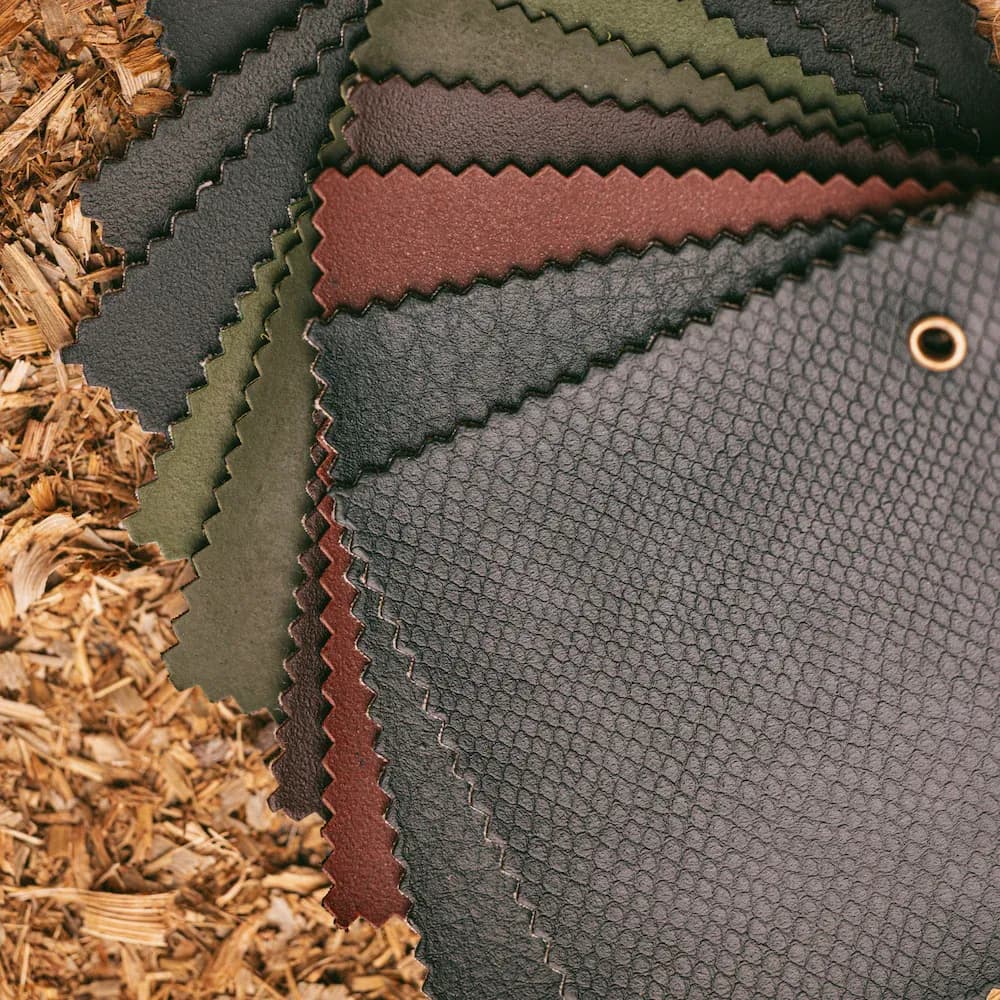
Urban waste streams, for instance, represent an underutilised resource in many cities. Biophilica’s Treekind, a compostable leather alternative, is derived from green waste collected in London. While not yet scaled for mass manufacturing, its development demonstrates how site-specific inputs and context-aware design can reduce dependence on globalised raw material flows.
3. Optimise Rather than Maximise
Nature doesn’t overbuild. Instead, it optimises: spider silk achieves tensile strength superior to steel—without bulk or heat-intensive processing. Efficiency is achieved through form, structure, and material economy.
In engineered materials, this idea translates to doing more with less—without sacrificing performance. Revoltech’s LOVR, a hemp-based leather alternative, exemplifies this thinking. Made from agricultural waste, the material prioritises simplicity in composition and process. While still being tested for broader industrial use, its low-input model reflects an emerging approach that privileges efficiency over abundance.
🔗 Read the interview of Revoltech on LOVR with Tocco
4. Leverage Feedback Loops
Biological systems are not linear. They self-regulate through constant feedback—whether through hormonal signalling, energy balance, or ecological checks and balances. This capacity for responsive adjustment is increasingly relevant in material development.
Made of Air, a company producing carbon-negative thermoplastics, integrates lifecycle assessment (LCA) data and client input into ongoing iterations of their products. Rather than treating performance evaluation as retrospective, they use environmental and operational feedback to refine material formulations and application strategies—mirroring how natural systems evolve through adaptation.
5. Rely on Renewable Cycles
Nature doesn’t extract—it regenerates. From fungal networks to photosynthetic fibres, many of the materials found in living systems are part of continuous, closed-loop cycles. When applied to industrial design, this logic offers a counterpoint to resource depletion.
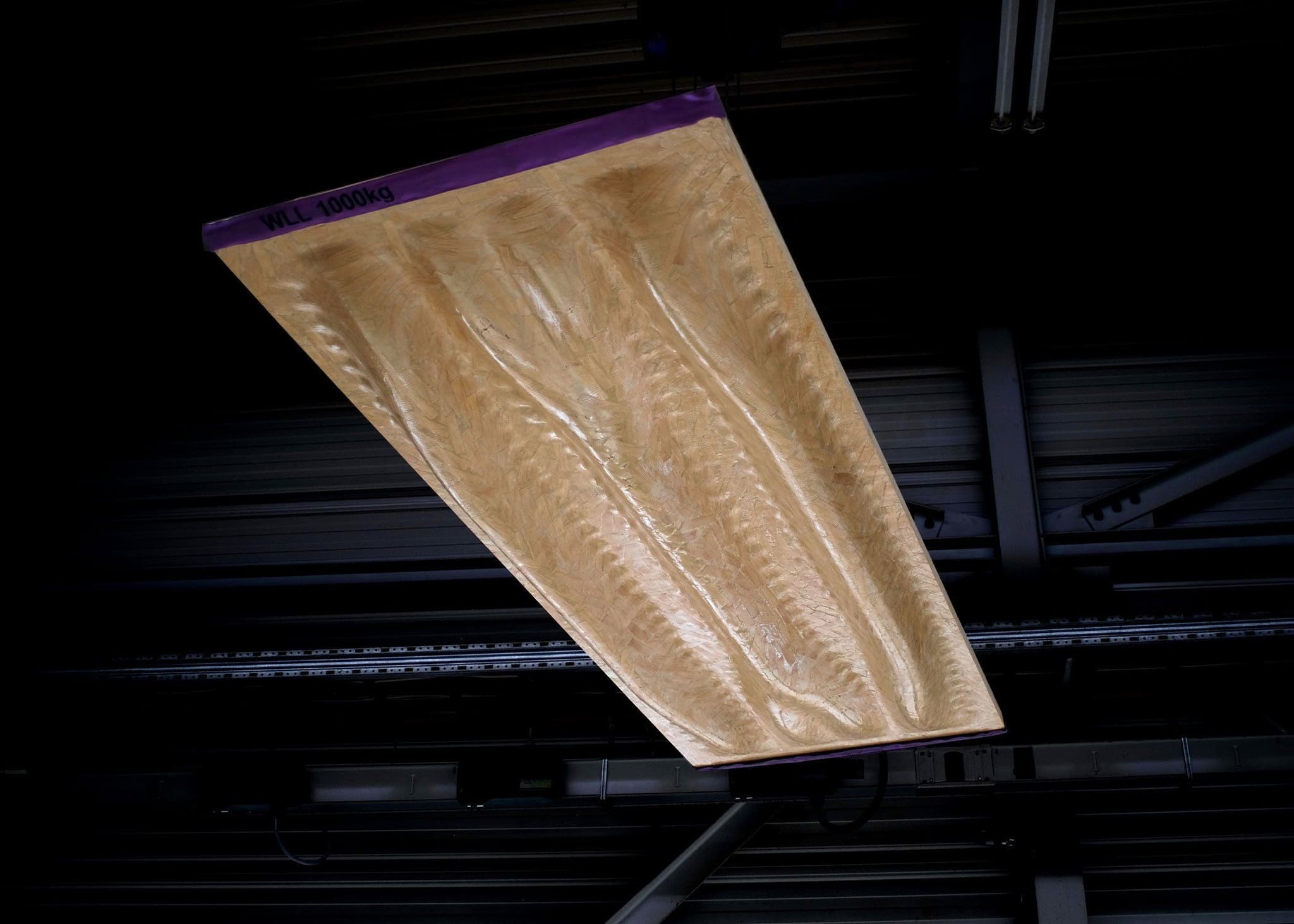
Strong by Form, based in Chile, applies this thinking to composite materials. Using wood fibres from renewable sources, Strong By Form employs generative design techniques that mimic bone structure—allocating material density where stress is highest. The result is a structural material that minimises waste and maximises performance, guided by regenerative sourcing.
6. Evolve to Survive
Organisms that survive are not static. They adapt, iterate, and evolve in response to changing pressures. For materials to remain viable, they too must respond to evolving technical requirements, market needs, and regulatory conditions.
Bolt Threads’ Mylo™ , a leather-like material derived from mycelium, has undergone over 10,000 development cycles. Though production and adoption remain in the pilot stage, its ongoing refinement through partnerships with brands like Stella McCartney and Adidas demonstrates a methodical approach to scaling biomaterials through real-world validation and iterative testing.
7. Cultivate Cooperative Networks
Ecosystems thrive through interdependence. Mycorrhizal fungi exchange nutrients with tree roots; coral reefs host entire micro-economies of life. Innovation, particularly in early-stage material science, also benefits from decentralised intelligence and cross-sector collaboration.
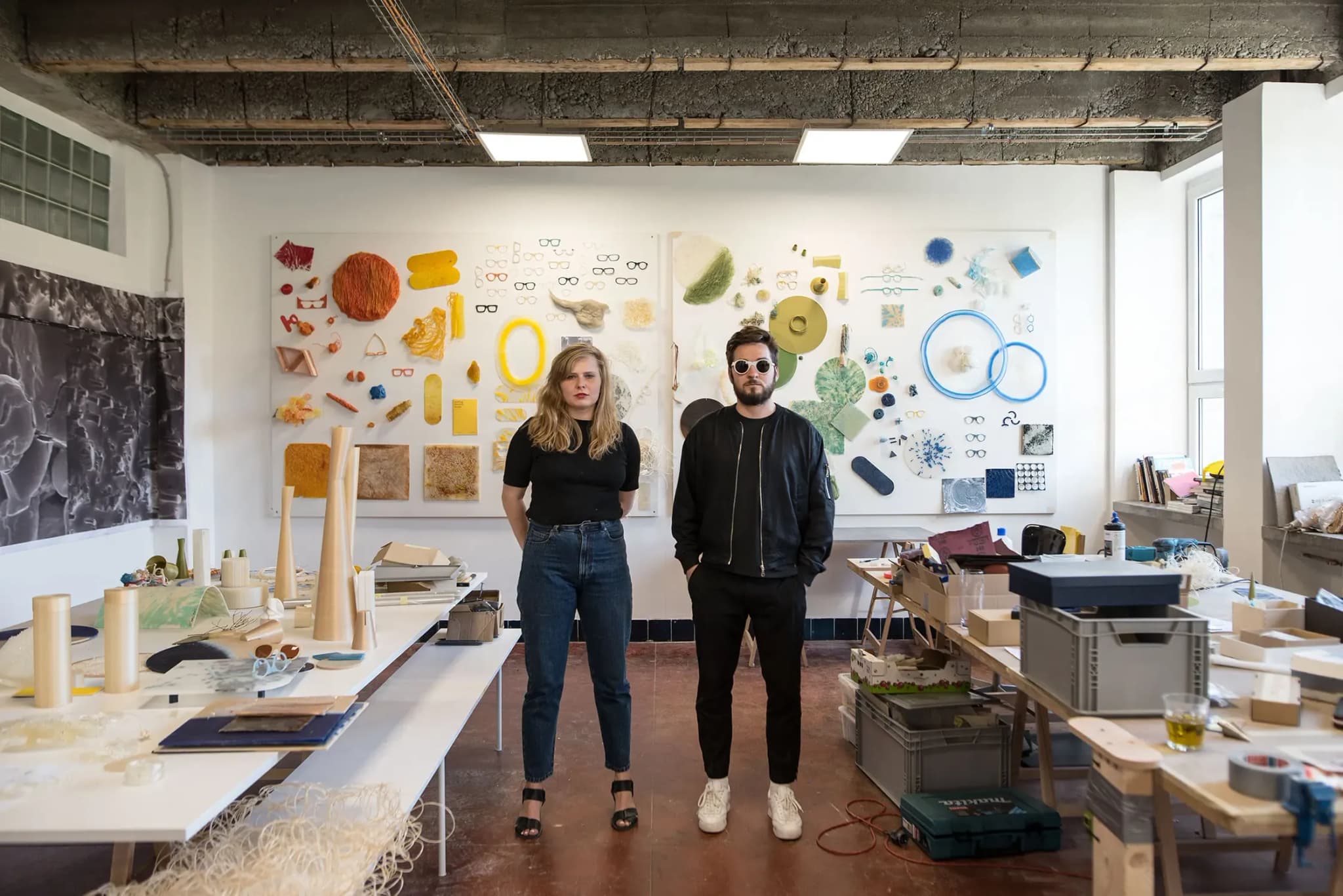
Crafting Plastics! Studio (Slovakia) operates with this model in mind. Their development of Nuatan bioplastics is shaped through collaborations with universities, research labs, and product designers. Rather than following a closed innovation pipeline, they adopt a networked R&D process that mirrors ecological collaboration.
Tocco’s take
These seven principles could be the keys to reimagine material development based on proven ecological logic. While most case studies remain pre-commercial or early-phase, their directional insights are clear: future-fit materials will be context-aware, low-impact, adaptive, and integrated.
🔗 Explore Tocco’s Digital Material Library for more material innovators
🔗 Check out TOCCO Unbox 2025 - world’s first portable material library