Environmental concerns have reached a critical juncture, and the imperative for sustainable solutions has become undeniable. Regenerative design enters this scene as a potential way to not merely reduce our ecological footprint but to actively replenish and restore the natural systems we rely on.
Regenerative design is based on the understanding that nature is a complex, interconnected web of relationships. By working with these relationships, regenerative designers can create systems that are more resilient, productive, and beneficial to all life.
Understanding regenerative design
Regenerative design is an innovative and forward-thinking approach. It seeks to create sustainable and flourishing systems by drawing inspiration from nature's inherent wisdom. Unlike traditional sustainability efforts that focus on minimizing harm or resource depletion, regenerative design aims to actively enhance the well-being of both human society and the natural environment.
At its core, regenerative design aligns with the principles of ecological resilience and ecosystem health. It acknowledges that all components of an ecosystem are interconnected and interdependent, operating within complex, dynamic, and adaptive systems. By mimicking and integrating these natural systems, regenerative design seeks to harmonize human activities with the surrounding environment.
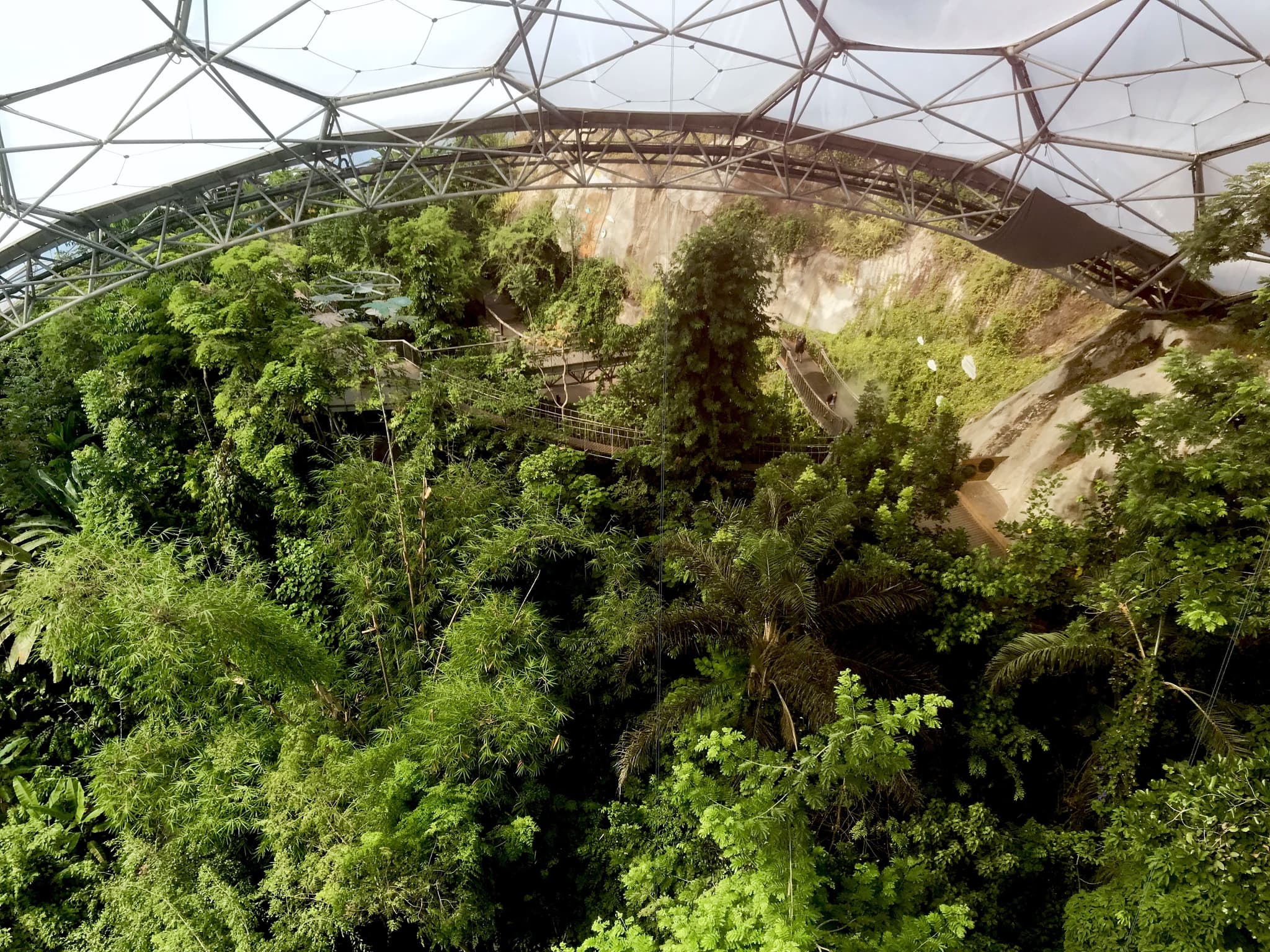
The Eden Project in Cornwall, England, is a prime example of how this harmony can be achieved. Built on a former clay pit, it now houses a range of plants from around the world.
The significance of regenerative design
By going beyond conventional sustainability practices, regenerative design seeks to actively restore and enhance ecosystems, making it a powerful tool in the fight against environmental degradation and climate change.
Restoration of ecosystems
Traditional sustainability efforts often aim to mitigate human impacts on the environment. In contrast, regenerative design focuses on revitalizing ecosystems and ecological processes.
By emulating nature's principles, regenerative practices promote the recovery of degraded lands and habitats, allowing ecosystems to rebuild their resilience and self-regulating capabilities. The design of the Bronx River Greenway has helped restore the Bronx River and the surrounding habitat.
Conservation of biodiversity
Biodiversity is crucial for ecosystem health and resilience. Regenerative design promotes the integration of diverse species, which fosters ecological complexity and strengthens ecosystems against disturbances. The High Line Park in New York City exemplifies this possibility. It has witnessed increased plant species diversity, growing from 245 species and cultivars to 500 species and cultivars. A diverse ecosystem can better adapt to changes and is more resistant to invasive species and diseases.
Carbon sequestration
Climate change is one of the most significant threats facing the planet. Regenerative design, especially in the context of regenerative agriculture and reforestation, can contribute to carbon sequestration. The Great Green Wall Initiative aims to restore degraded land across Africa and sequester 250 million tons of carbon. Healthy soils and thriving forests can act as carbon sinks, helping to mitigate the effects of greenhouse gas emissions.
Water management
Regenerative design often incorporates water management strategies that aim to mimic natural hydrological cycles. By promoting water retention, infiltration, and purification, regenerative practices help prevent soil erosion, mitigate flooding, and replenish groundwater reserves. Bioswales and rain gardens help remove impurities from stormwater while simultaneously aiding the growth of flowers and trees.
The 'why' of regenerative design
Regenerative design is necessary in our current socio-environmental context because urbanization has exacted a heavy toll on our natural ecosystems. By 2050, two-thirds of the global population is expected to live in urban areas. The rapid growth of cities and urban areas has led to habitat destruction, loss of biodiversity, increased pollution, and heightened vulnerability to climate change. Many tiger sanctuaries, in India, for example, are being taken over by humans.
Trends like this are unsustainable. At this rate, we might use up everything. This is why regenerative design is important. With regenerative design, humans don't just take from nature; they also give back to nature to ensure that the delicate balance of ecosystems is sustained and restored. Urban centers are typically densely populated, meaning that limited resources are overstretched without recourse to how to replenish them.
The 'how' of regenerative design
Regenerative design is guided by a set of principles and processes that aim to create sustainable and thriving systems. These principles revolve around mimicking nature's efficiency and resilience to foster a harmonious coexistence between humans and the environment.
- Cyclic systems: Regenerative design embraces closed-loop systems that mimic nature's circular processes. Waste is seen as a resource, and materials are continuously reused, repurposed, or recycled, reducing the ecological footprint.
- Biomimicry: Drawing inspiration from nature, regenerative design applies biological strategies, patterns, and forms to solve human challenges. This approach leads to innovative and sustainable solutions.
- Biodiversity and ecological restoration: Regenerative design emphasizes the importance of biodiversity and aims to restore degraded ecosystems. By promoting diverse habitats and species, regenerative practices enhance ecological resilience.
- Renewable energy and resources: Regenerative design prioritizes the use of renewable energy sources and sustainable materials to reduce reliance on finite resources and minimize environmental impact.
How to implement a regenerative design
Implementing regenerative design in different contexts involves a systematic and adaptive approach that takes into account the unique characteristics and challenges of each domain.
- Understanding context and vision: Begin by comprehending the specific context, goals, and values of the project. Identify the key stakeholders and their needs. Establish a clear vision of how regenerative design principles can be integrated to create a positive impact.
- Ecological assessment: Conduct a thorough assessment of the site or product's ecological context. Identify existing ecological assets, potential for restoration, and areas of concern. Understand the local climate, biodiversity, and natural processes that influence the context.
- Design with nature: In architecture and product design, adopt biomimicry principles to draw inspiration from nature's forms, patterns, and functions. In urban planning, prioritize green infrastructure, such as parks, green roofs, and urban forests, to enhance ecosystem services and biodiversity. The Biesbosch Museum in the Netherlands and the Städel Museum in Germany are two examples of buildings with green roofs.
- Biodiversity and habitat enhancement: In all contexts, integrate biodiversity by incorporating native vegetation, green corridors, and wildlife habitats. Enhance ecosystems and create multifunctional spaces that benefit both humans and nature. The living wall of the Musée du Quai Branly in Paris is one of the most popular examples of the incorporation of living walls into building designs. Patrick Blanc designed the wall, and it contains 15,000 plants from 150 species.
Final thought
Regenerative design has emerged as a new way of addressing our environmental challenges. By transcending the limitations of traditional sustainability approaches, regenerative design offers the transformative potential to revive our planet and repair the damage caused by human activities.
Embracing the wisdom of nature, regenerative design fosters a profound connection between human systems and the environment for harmonious coexistence.
References
Great Green Wall Initiative. (n.d.). UNCCD. https://www.unccd.int/our-work/ggwi
High Line. (2023, June 12). Landscape Performance Series. https://www.landscapeperformance.org/case-study-briefs/high-line
Materials from living things: embracing the biomaterial revolution | tocco. (n.d.). https://tocco.earth/article/biomaterials/
Meinhold, B. (2014). Städel Museum Renovated with a Gorgeous Green Roof Dotted With Skylights. Inhabitat - Green Design, Innovation, Architecture, Green Building | Green Design & Innovation for a Better World. https://inhabitat.com/stadel-museum-updated-with-a-gorgeous-polka-dotted-green-roof-in-frankfurt/
The living wall of greenery. (n.d.). Musée Du Quai Branly - Jacques Chirac. https://www.quaibranly.fr/en/public-areas/the-living-wall-of-greenery
tocco: accelerate the arrival of a regenerative economy | tocco. (n.d.). https://tocco.earth/article/accelerate-the-arrival-of-a-regenerative-economy/
Urban Threats. (2021, May 3). Environment. https://www.nationalgeographic.com/environment/article/urban-threats
Werbeck, N. (2021, May 3). Dramatic Pictures Reveal Clashes Between People and Tigers. Photography.
https://www.nationalgeographic.com/photography/article/human-vs-tiger-conflict