How do you envision HBMS fitting into modern living spaces, and what kind of audience do you see it appealing to?
I want to democratise a method of thinking involved in product design. With HBMS, we are positioned with a high-end product. I would like to attract individuals who are concerned about sustainability issues in furniture production, which is often associated with brands that have mass distribution. By increasing the production of HBMS, we could make the shelving unit more accessible. We need to create objects that respect materials and anticipate their life cycle.
What challenges did you face during the development of the HBMS shelving unit, and how did you overcome them?
The biggest challenge I encountered was managing the tolerance of the metal sheet, which was very thin and therefore very malleable, to make it rigid and structured. This was essential for combining concept and function. This challenge was amplified by the size of my object, as the largest version of the shelf stands 2.5 metres tall.
Why did you choose stainless steel as the primary material for HBMS, and what advantages does it offer?
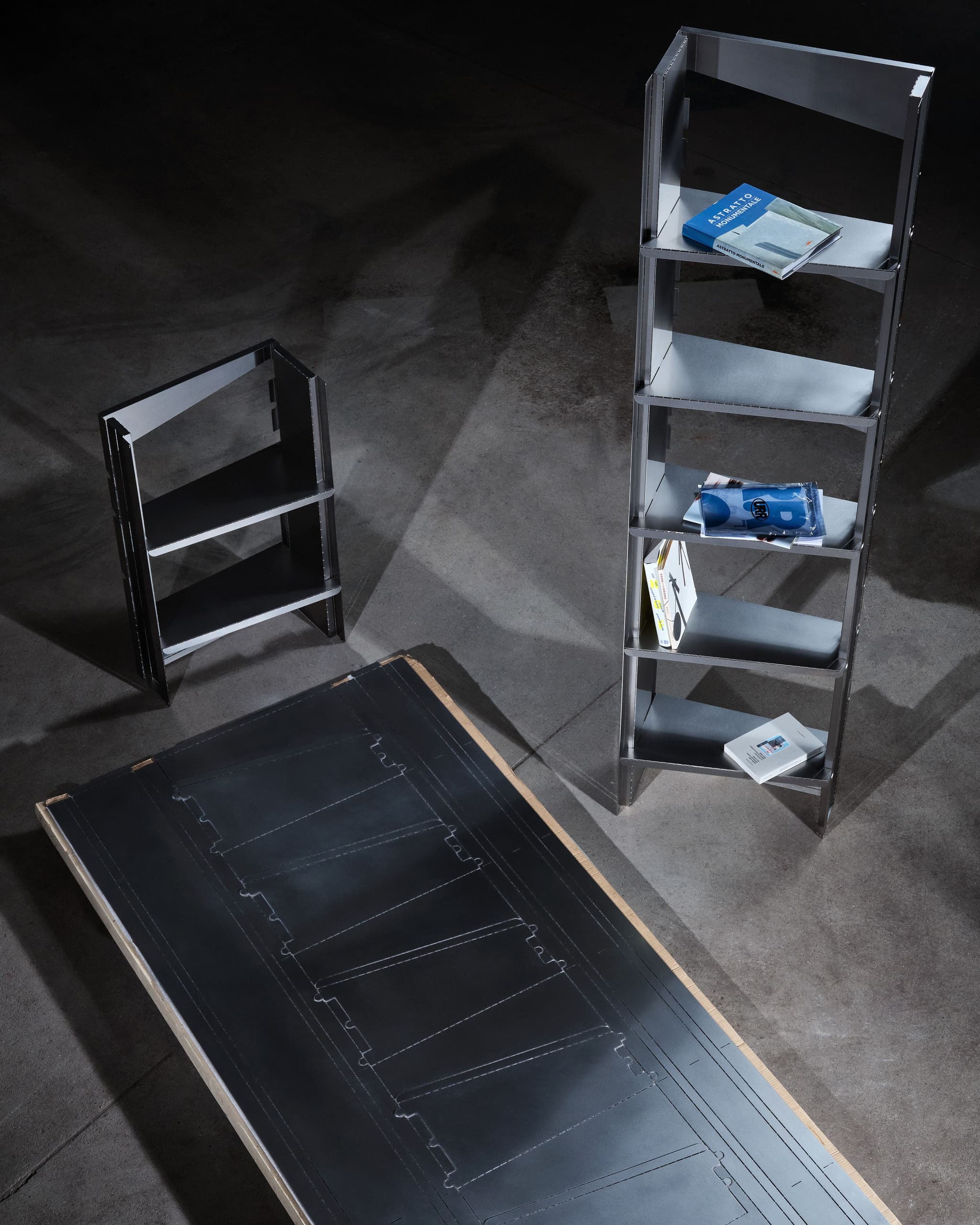
Stainless steel is a material with excellent durability over time. This quality was essential since it is the only material used in the object, which is made from a single piece. In this initial model of the object, there is no coating. The finish is achieved with a multidirectional sander, which highlights the 'timeless' aspect of brushed stainless steel.
What inspired the hand-folding technique, and how does it contribute to the structural integrity of the shelf?
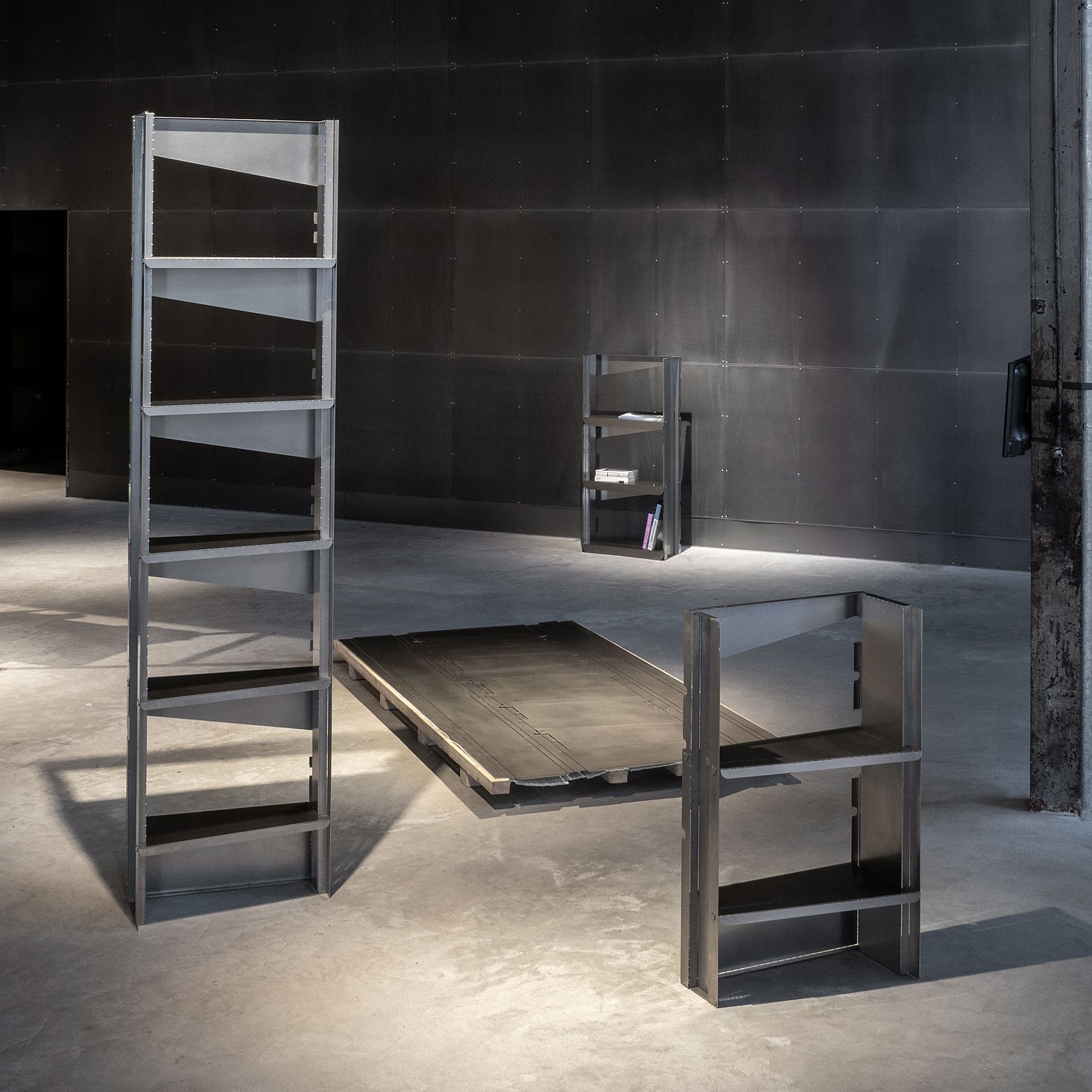
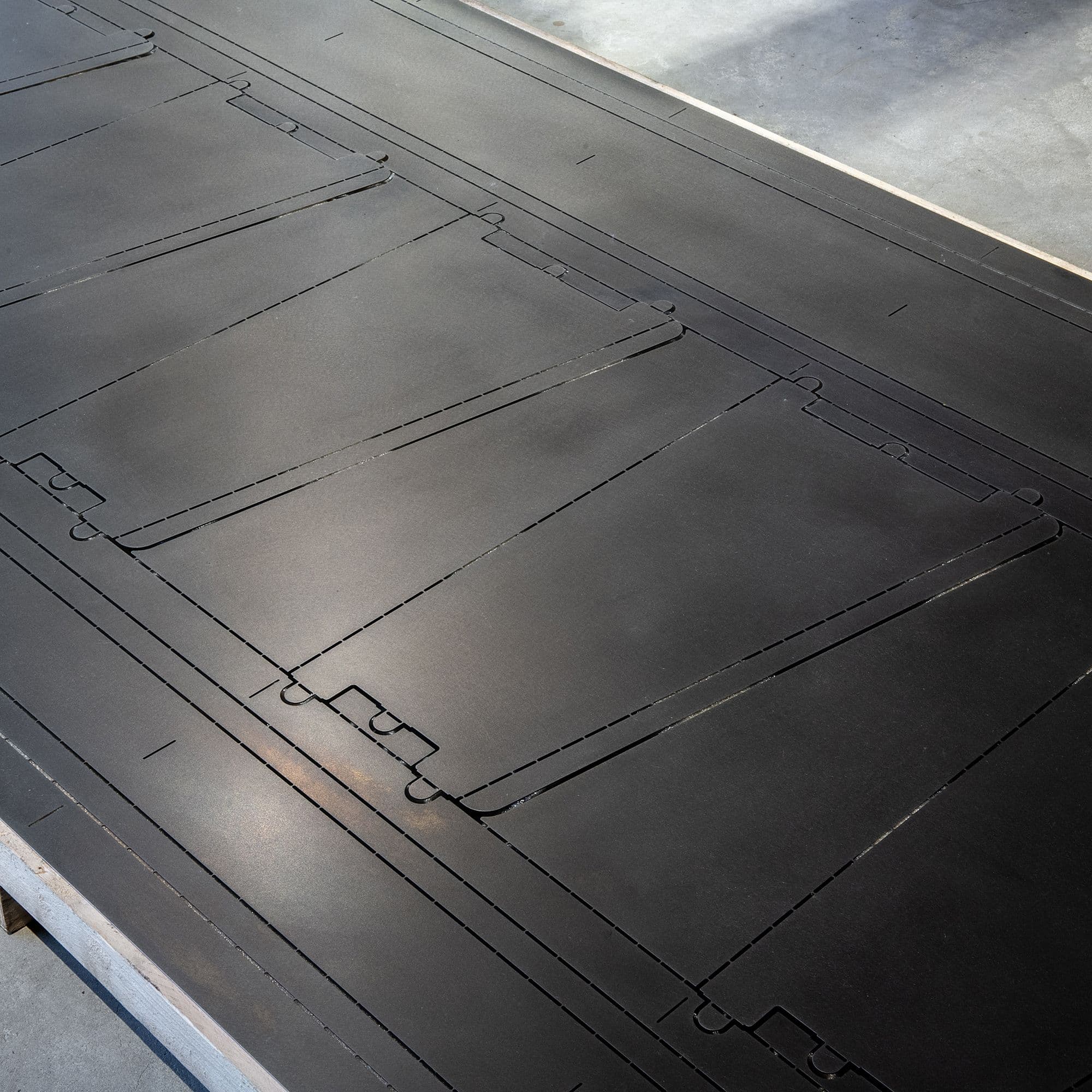
I was inspired by the Japanese folding technique called 'Kirigami'. This method allows the entire surface of a sheet of paper to be utilised. By making cuts and folds in different directions, a structure takes shape. With HBMS, a similar approach is used; however, the folds cannot be made by machine due to the interlocking of certain panels. This principle of construction was the foundation that guided the entire design process.
How do you ensure the durability and longevity of the HBMS shelving unit, given its hand-bent nature?
Mono-material designs are certainly more respectful of the materials themselves. They do not require processing to separate each material or isolate each component for recycling or upcycling. I consider this way of thinking to be integral to ensuring durability and longevity. Knowing that each HBMS is 100% reusable, as stainless steel has no limit on reuse, reinforces this approach.
Stainless steel is one of the most recycled materials in our daily lives. Additionally, it does not require varnish or treatment, only regular cleaning maintenance. Once the metal is folded, it stays in place and will not move. It retains its properties over time and in various exposure environments.
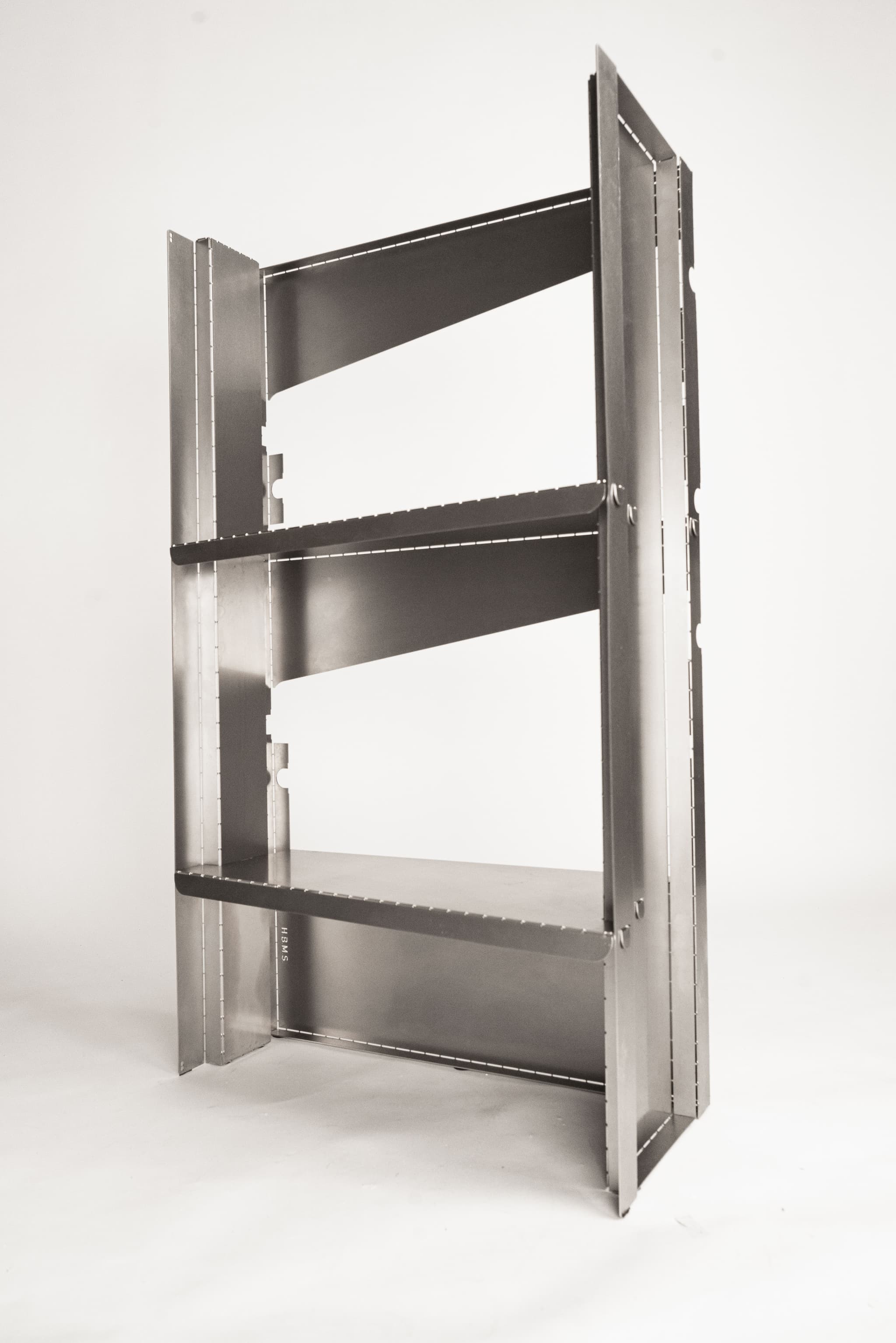
How does the thickness of the stainless-steel sheet (1.5 millimetres) contribute to the overall functionality and aesthetics of HBMS?
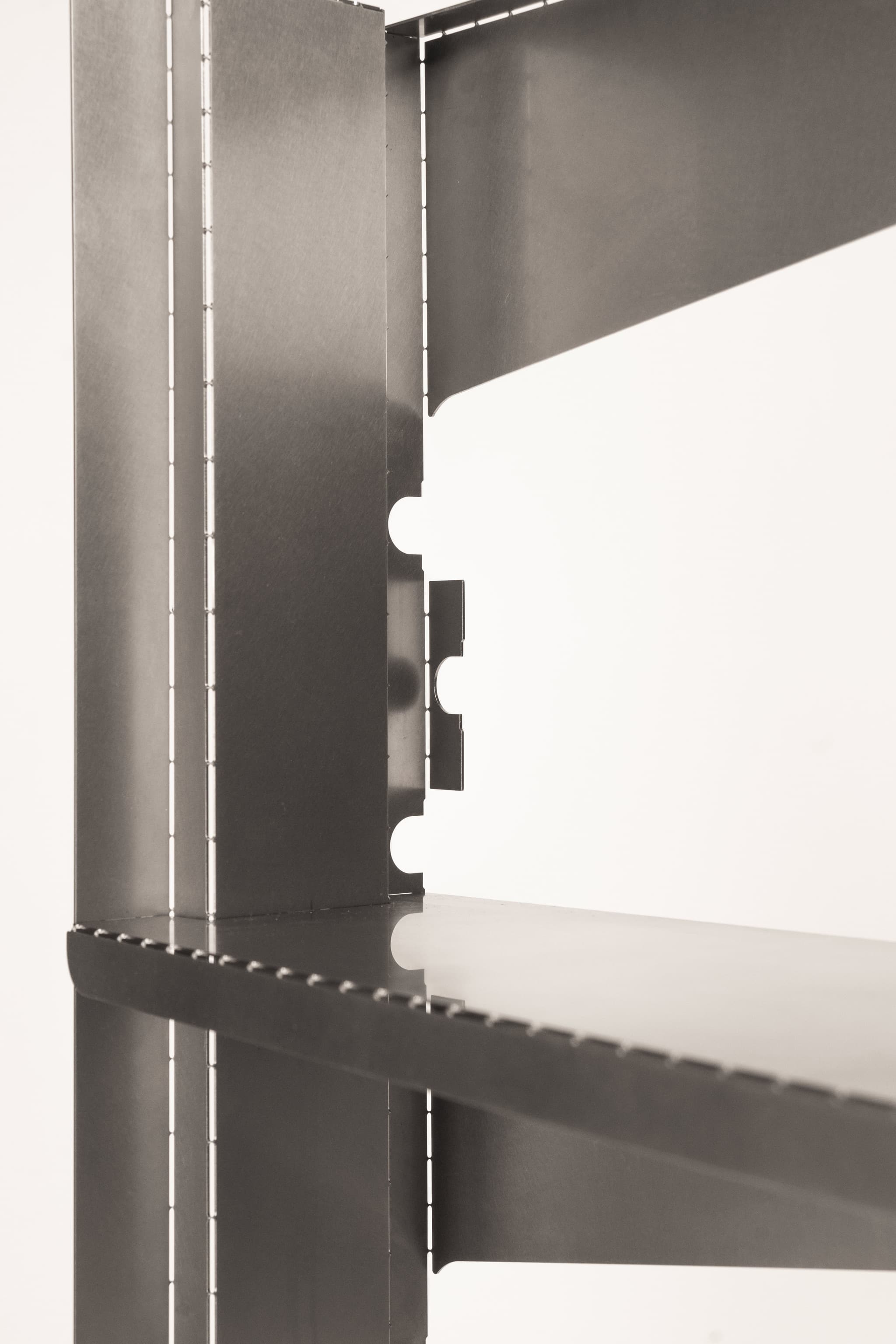
The thickness of the sheet used contributes to the elegance of the shelf. Being very thin, it allows light to pass through the cutouts distributed across the entire shelf. These cutouts are the main feature of this design, as they enable the folding to be done by hand.
The chosen sheet is also a key factor because the 1.5-millimetre thickness is just enough to allow folding due to its thinness while also making the shelf as sturdy as possible thanks to its thickness. Stainless steel is extremely malleable, which is why I chose this type of metal sheet. This choice was made after extensive experimentation with the parameters, almost like tuning a radio to the right frequency: adjusting tolerance, reducing the size of the cutouts, and then refining until finding the perfect balance.
How did you develop the unique locking system that allows the shelf to be assembled without fasteners or adhesives?
As described above, the shelf folds onto itself. A few cuts engage at 90° into another plane of the design. To avoid incorporating additional materials in the construction, it was necessary to develop latches already integrated into the cutting design. Thus, small flaps extend from the sides of the shelf, which must be folded to lock the structure in place.
In the next iteration of the shelf, additional latches will allow different shelf modules to connect. This will enable the creation of modular spaces using a simple and effective locking system.
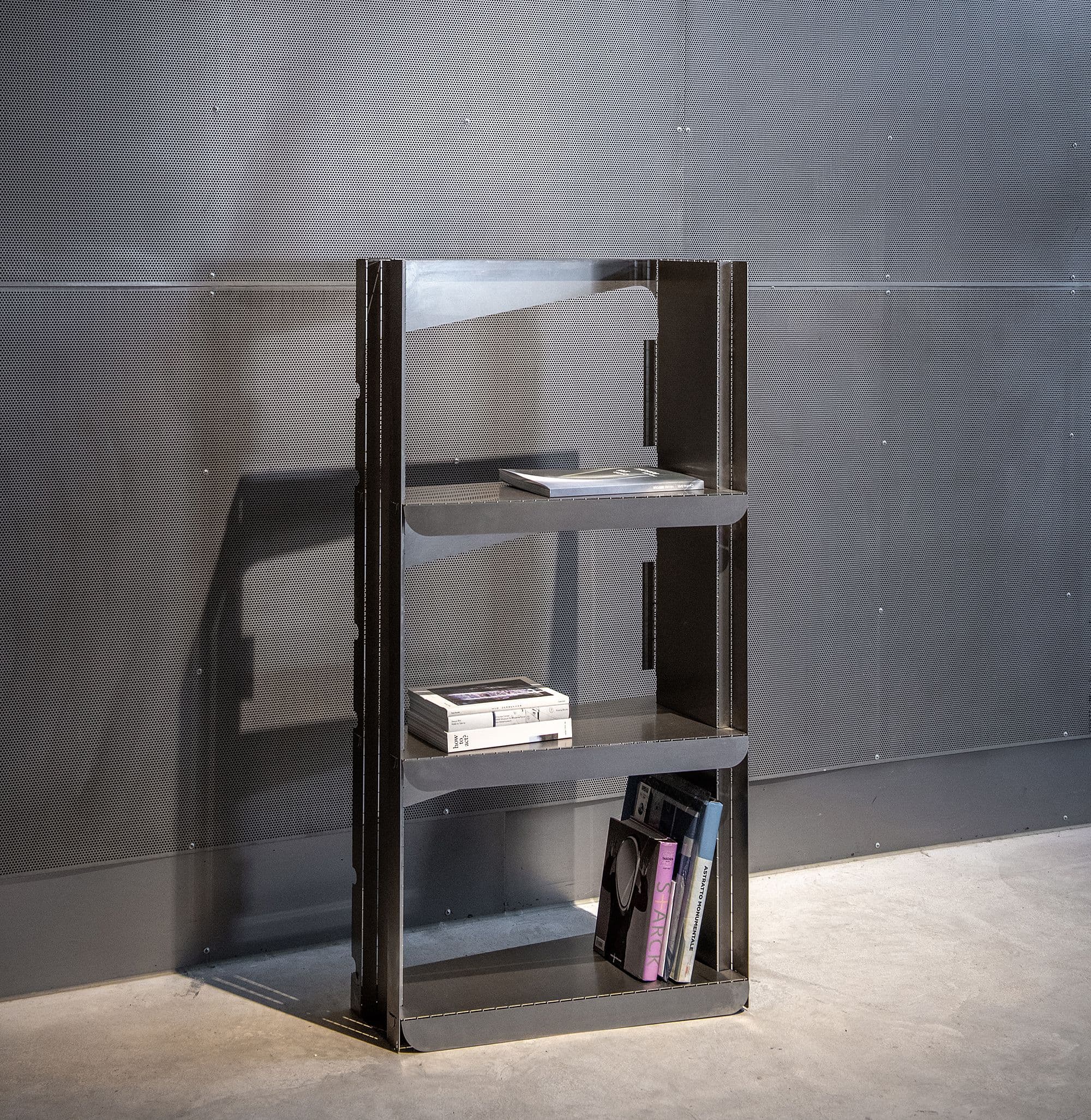
What was your design process for ensuring that all elements of the HBMS shelf are nested within the single metal sheet for structural support?
The design of HBMS had to be conceived and drawn flat, as the object only takes shape after the intervention of machines. The digital cutting and sanding processes are performed on the flat sheet. A mechanical engineer was involved in the creation process to verify my structural estimations. The shelf stands on its own and is stable; the connections are solid, and each level can support at least 70 kilograms. To ensure structural support, meticulous planning allowed us to create this unique object.
What new sustainable design projects are you considering for the future, and how will your experience with HBMS influence these endeavours?
I am now working on projects that aim to optimise materials with industrial uses, highlighted by a specific machine. This involves a precise production technique to study its limits and honour the materials. The next project is expected to involve outdoor products, using appropriate metals and carefully sourced European wood.
The lesson I learned from the HBMS project is that there are no limits in detail and that predefined parameters push us to find solutions. Creating products within parameters that align with production principles drives the generation of new ideas, objects, and concepts that we have yet to discover!