1. Crushing The Rocks explores the use of local rocks and minerals for textile dyeing and printing. Can you explain how these natural pigments are extracted and applied to fabric, and how the geological origin of the rocks influences the color results?
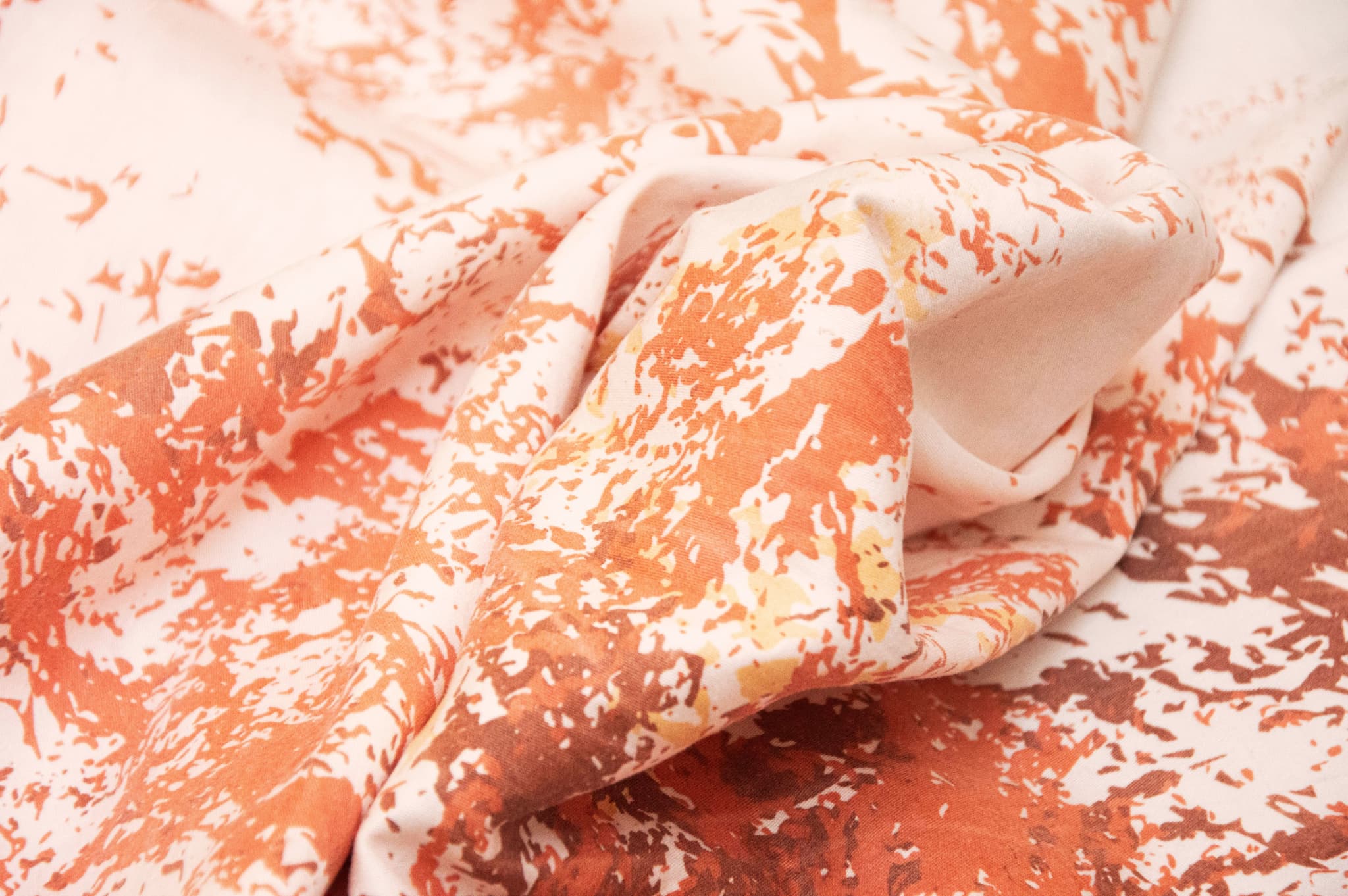
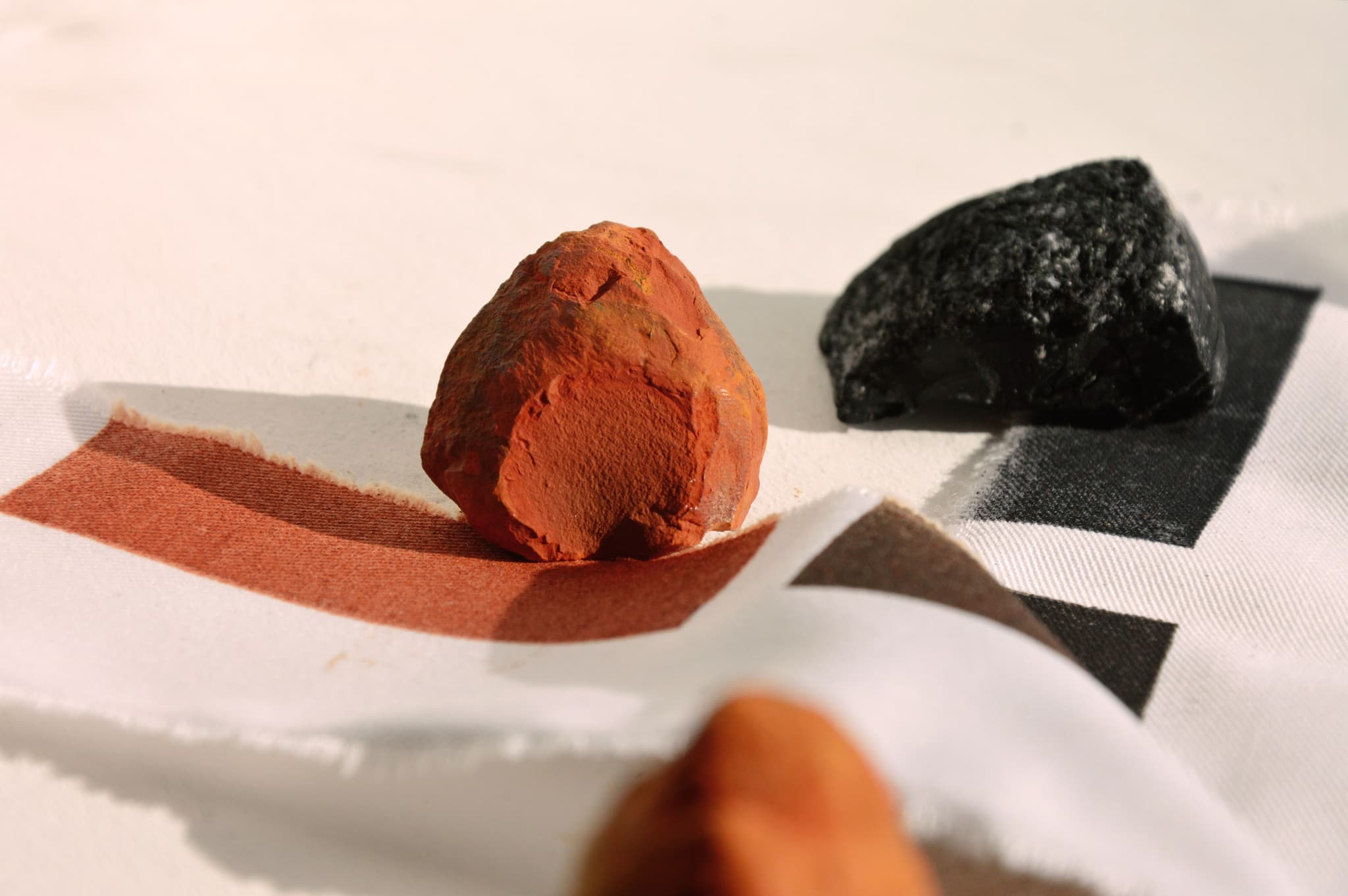
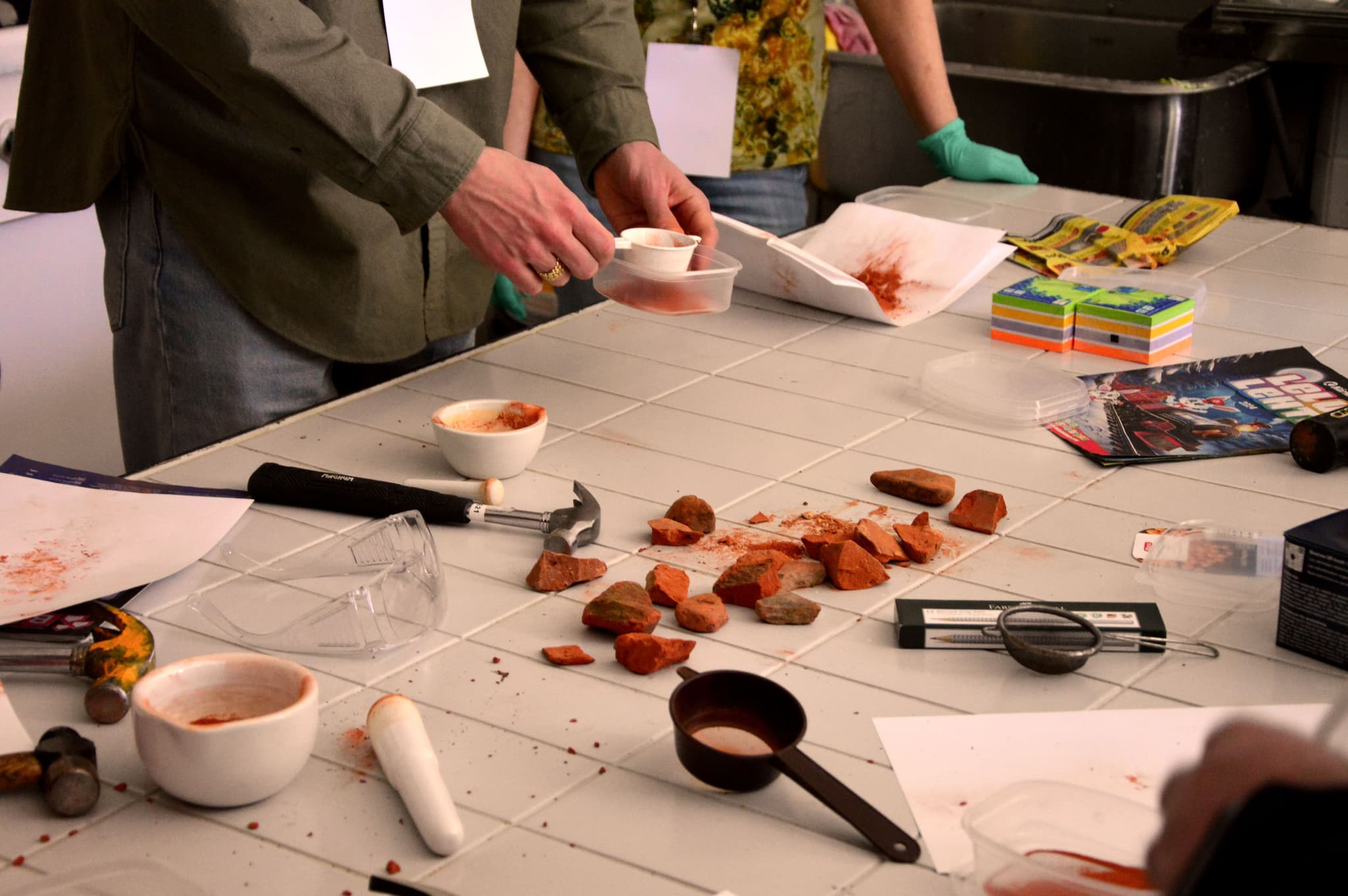
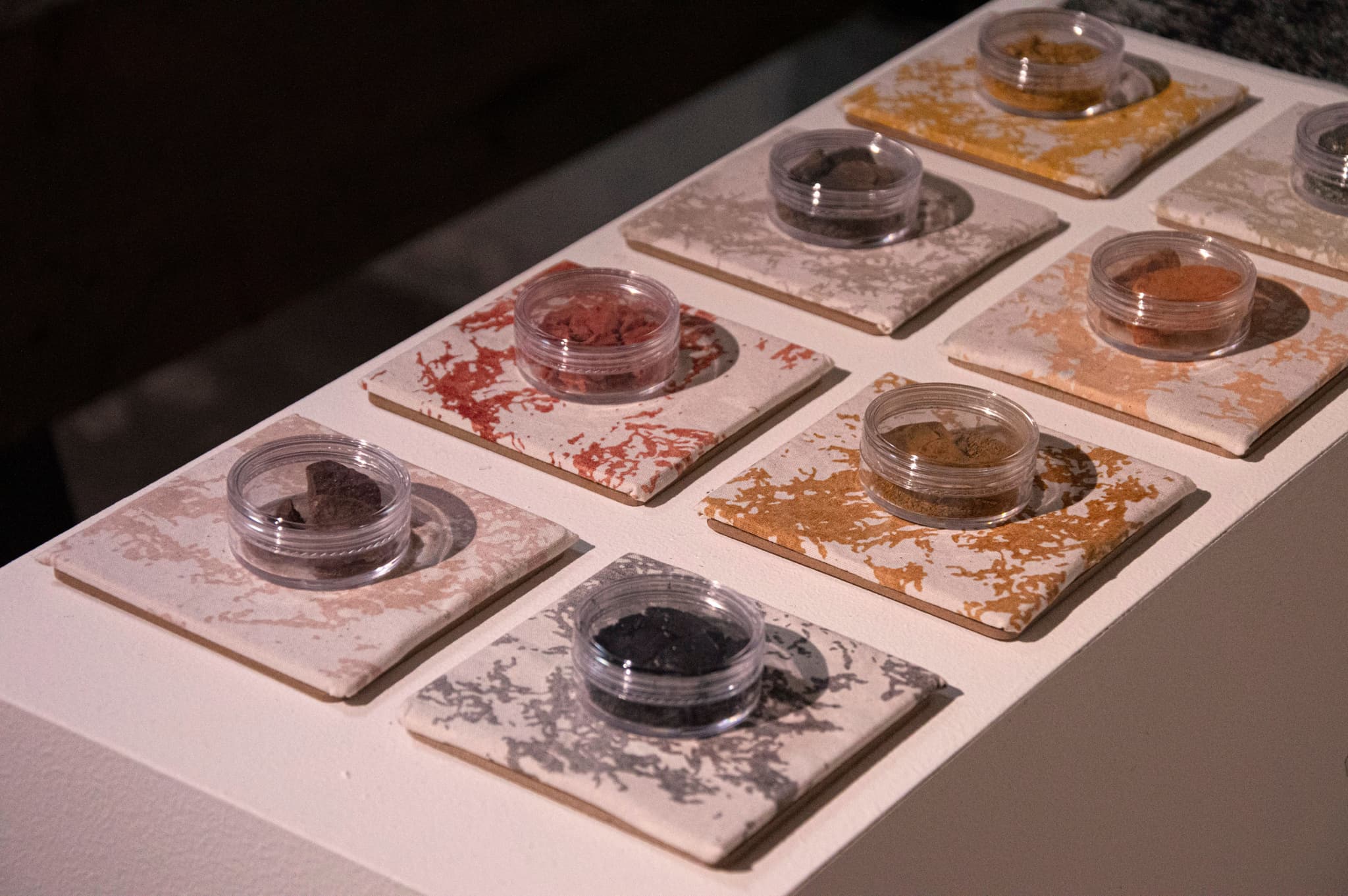
My first experiments started simply by using rocks I collected during walks, mostly in the Danish landscape. It was a very intuitive process: after collecting the rocks, I crushed them with a hammer and mortar to get a powder, then mixed that into a paste to test how it would print on fabric.
As I kept experimenting, I realized I needed a suitable binder to fix the pigment onto textile. I developed a repeatable screen-printing protocol that achieved more stable results on different fabrics.
This process deepened my awareness of material collection. I started asking: What is the nature of this place? Am I eligible to gather materials from here? In what quantity? This marked a shift toward a less extractivist approach.
I also began experimenting with old bricks and formed a collaboration with the Institute of Geotechnics of the Slovak Academy of Sciences, which researches acidic mine waters in the Slovak Ore Mountains. These waters -laden with heavy metals - flow into rivers, tinting them ochre. I tested the mineral schwertmannite, a likely constituent of these waters, as a raw material for textile printing. The results were very promising, suggesting potential for reusing filtered minerals from polluted sources in textile applications.
2. What technical hurdles did you encounter in adapting these natural pigments for use on synthetic fibers like polyester, and how did you ensure the same level of saturation and durability as conventional dyes?
This is part of a broader ongoing design research, not aimed at replacing conventional dyeing but at expanding our thinking about textiles. I welcome collaboration with material scientists and engineers to explore further.
One technical challenge I explored was adapting mineral pigments to polyester. Since these pigments are water-insoluble, I found that printing (rather than dyeing) yielded better results. By using biodegradable binders based on plant protein or chitosan, I was able to encapsulate the pigments, achieving good saturation and durability even on synthetic fibers.
3. The project emphasizes a shift from a linear to a more circular approach in textile production. Can you explain how your work contributes to the broader dialogue on overproduction and overconsumption in the textile industry, and how it advocates for a more sustainable understanding of textile materials?
My work is rooted in my doctoral research, questioning the societal disconnection from textile materials - especially in the context of EU textile overconsumption. There's a tendency to discard functioning textiles simply due to aesthetic changes, revealing a lack of material appreciation.
While sustainable production is crucial, we also need to rethink our consumption habits. Recycling systems are only partial solutions; we must address the root causes of overconsumption.
4. Your work with mineral pigments, combined with binders like soybeans and chitosan, offers an alternative to traditional dyeing processes. How do you ensure that these binders not only facilitate effective dye transfer but also align with the sustainability goals of the project?
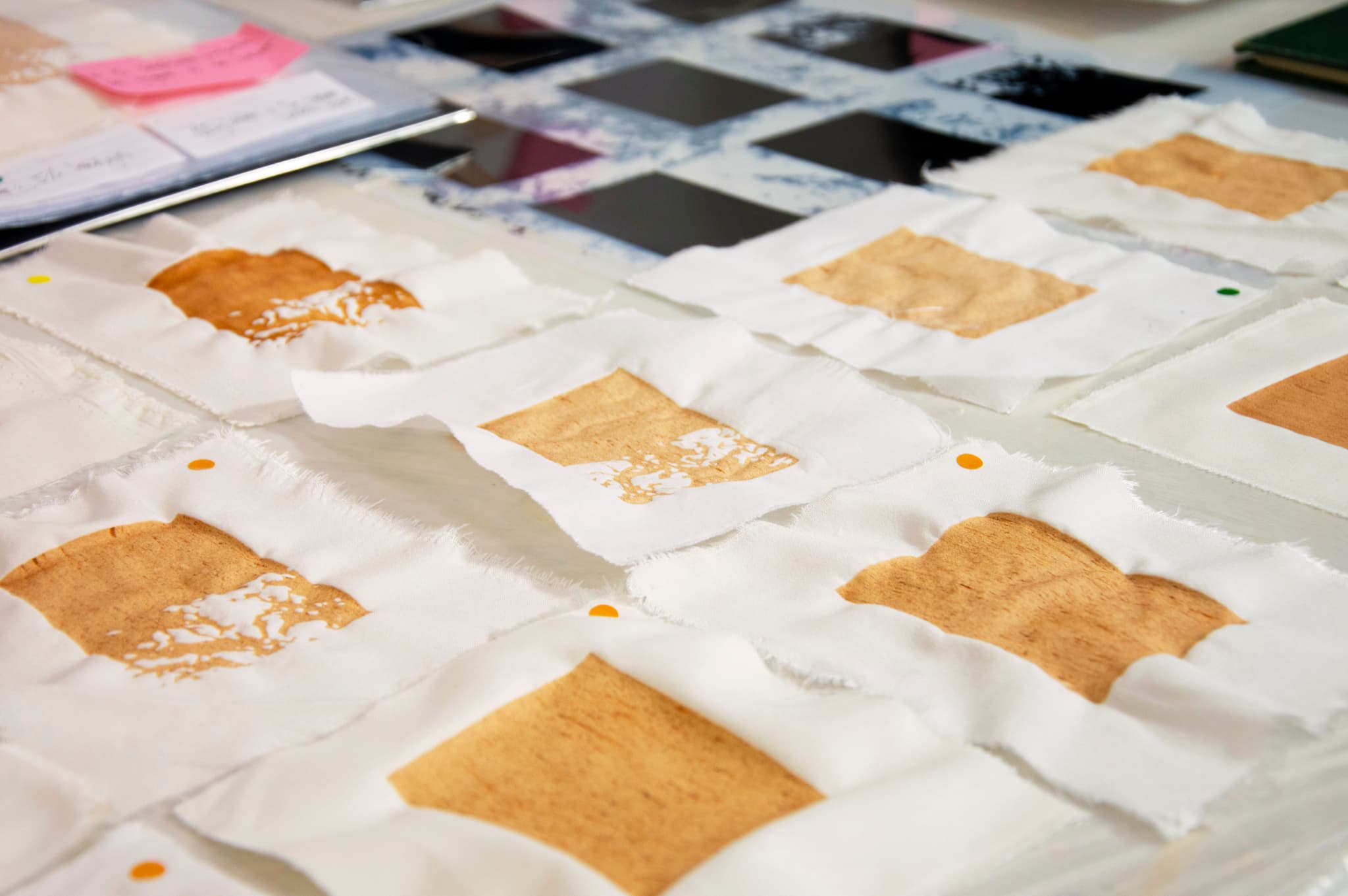
I use biodegradable, non-toxic binders like soybeans and chitosan either as printing pastes or mordants. Chitosan is a natural polymer with antibacterial properties, often sourced from seafood industry byproducts. This promotes a circular economy.
Soybeans, too, can be used in circular ways - e.g., by utilizing byproducts from soymilk production. The safety of these materials enables craft-based workshops, making the process accessible and educational.
5. You mention the importance of ‘no expectations’ while working with new materials. Can you elaborate on how this mindset shaped the way you approached the experimentation process?
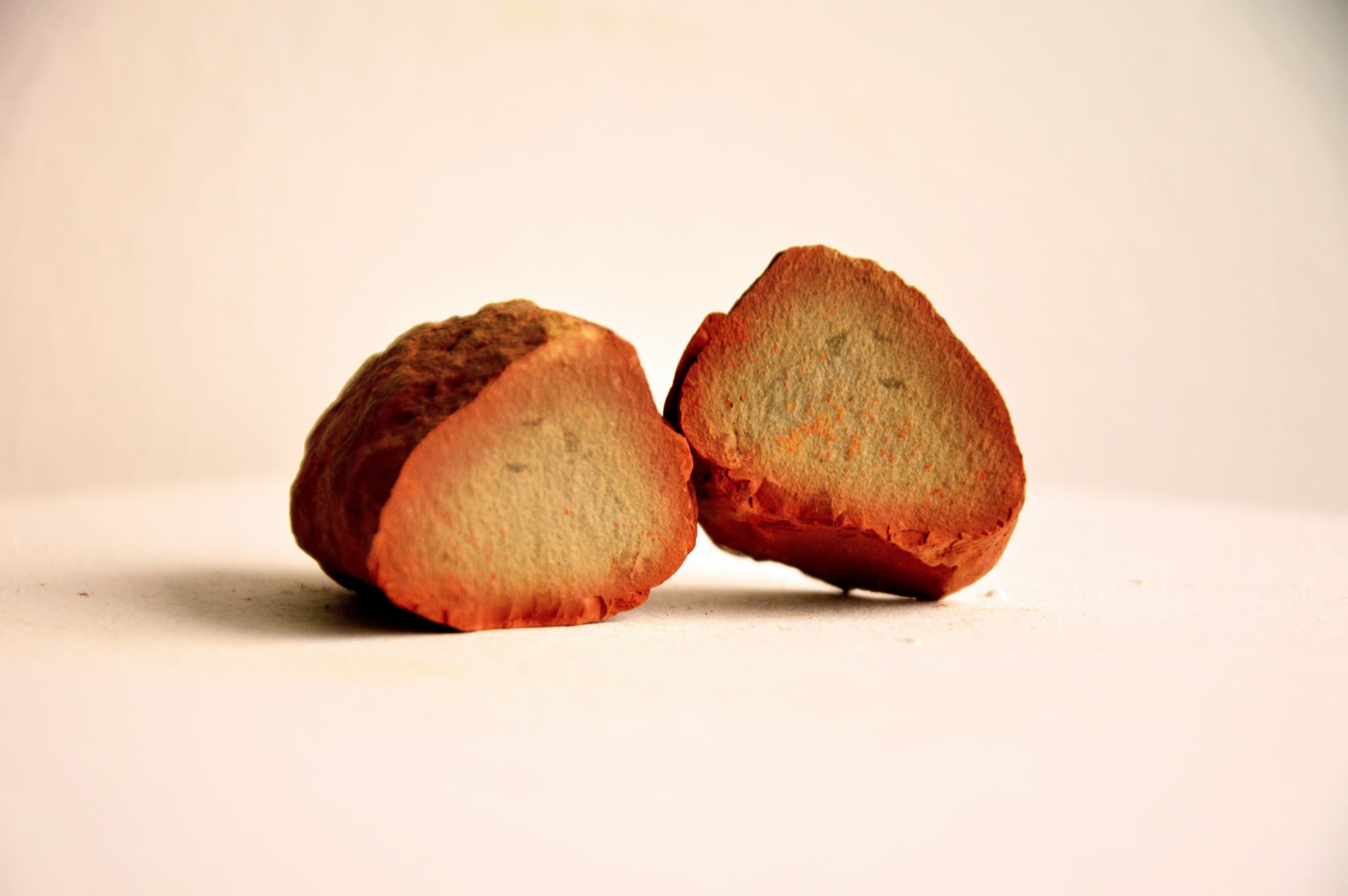
The idea of ‘no expectations’ came from the act of crushing rocks. The color outcome rarely matches the rock’s exterior, as different minerals blend and reveal unexpected results. This encourages a process-focused mindset.
I extend this openness to all material experimentation. New materials deserve new approaches - judging them with conventional metrics may limit discovery. This attitude led me to test slag from the steel industry, which at first seemed overly ambitious but proved valuable.
6. Can you share some of the key findings from your research on textile dyeing with minerals, and how these findings could inform future textile production practices in the context of sustainability and local sourcing?
My research isn’t about scalability but about slowing down to ask better questions: What knowledge arises from paying attention to material origins? What does textile mean now and in the future?
Some technological insights: mineral prints show excellent UV resistance and color stability. Pigments can be filtered and reused, reinforcing a circular approach. Chitosan- and protein-based binders also perform well, are non-toxic, and are easy to source.
This research aims to deepen our understanding of textile narratives and challenge the speed and volume of conventional production.
7. How do you envision the role of natural dyes, such as those derived from minerals, evolving in the broader textile industry? Could this technique become more widespread as consumers demand more sustainable options?
I see the future of mineral pigments in education and craft-based workshops. While some companies already use these dyes commercially, my focus is educational. Teaching people how to collect, crush, and process rocks fosters awareness and appreciation for color sources.
By working with their hands, participants begin to grasp the origins of color, planting seeds for broader perspective shifts around textiles and sustainability.
8. Looking ahead, what do you hope your work on Crushing The Rocks will contribute to the ongoing conversation about sustainability in the textile industry? Do you think that natural, locally-sourced materials will become a more prominent choice for designers and manufacturers in the coming years?
Crushing The Rocks isn't a quick fix - it’s not about having a market-ready dyeing technique. It’s about rethinking how we use and value materials.
If my work contributes anything, I hope it's an invitation to slow down, listen to materials, and stay curious. This mindset can guide designers to engage with their local environment and explore surrounding resources. Passion is the cornerstone of a meaningful project.
---
→ Natural inputs are only useful if they scale. Read Tocco Report: Pigments & Dyes 2030 for industrial routes - waste-derived dyes, enzymatic processes, and low-water printing that keep specs stable.