Brands today are caught in a quandary: consumers demand sustainable packaging, yet navigating the green jargon can feel like deciphering an enigmatic code. In the world of eco-friendly alternatives, 'biodegradable' and 'compostable' materials can be interesting options for brands who want to stand out.
However, this new lexicon brings its own challenge, muddying the waters for brands striving to make ethical choices in packaging. The indiscriminate use of these terms often leads to confusion, as marketers, suppliers, and consumers interchangeably use them without understanding the distinct processes and end-of-life impacts of each material. This article cuts through the generic terminology, offering clarity on the importance of sourcing accurately.
Defining the terms and their key differences
Biodegradable
Biodegradable packaging refers to materials used in packaging that can be broken down by microorganisms into natural elements, such as water, carbon dioxide, and organic matter.
The American Society for Testing and Materials defines biodegradable plastic as a plastic that degrades because of the action of naturally occurring microorganisms such as bacteria, fungi, and algae. The time required for biodegradable packaging to decompose can vary significantly depending on the specific material and environmental conditions. It can range from weeks to years, but it generally breaks down more quickly than non-biodegradable materials.
Biodegradable packaging typically decomposes into harmless substances, such as water, carbon dioxide, and compost. However, there is some potential for harmful residues to be left behind, depending on the type of material used.
Biodegradable packaging can be disposed of in various ways, including landfills and recycling bins. However, it is important to note that some biodegradable materials may not fully degrade in landfills, but they will still degrade faster than non-biodegradable materials.
Compostable
Compostable packaging refers to materials that have the ability to break down under composting conditions into nutrient-rich compost, which can be used to improve soil quality. The Royal Society of Chemistry defines compostable plastics as a type of biodegradable plastic which breaks down in specific composting conditions, at home or in an industrial facility, into biomass, organic and inorganic compounds, CO2, and water.
Usually, compostable packaging decomposes within a relatively short period, ranging from 90 to 180 days, when subjected to the controlled conditions that facilitate composting. For example, the compostable packaging tested in a study by Wageningen University & Research (WUR), Netherlands, broke down within a maximum of 22 days. The decomposition of compostable packaging results in the production of environmentally friendly end products, including carbon dioxide, water, inorganic compounds, and biomass, with no toxic residue left behind.
Unlike biodegradable materials, compostable packaging requires specific composting conditions to facilitate its decomposition effectively. These conditions include the right temperature, moisture, and microbial activity to convert the packaging into valuable compost that can enrich the soil.
The table below gives a more concise overview of the two terms:
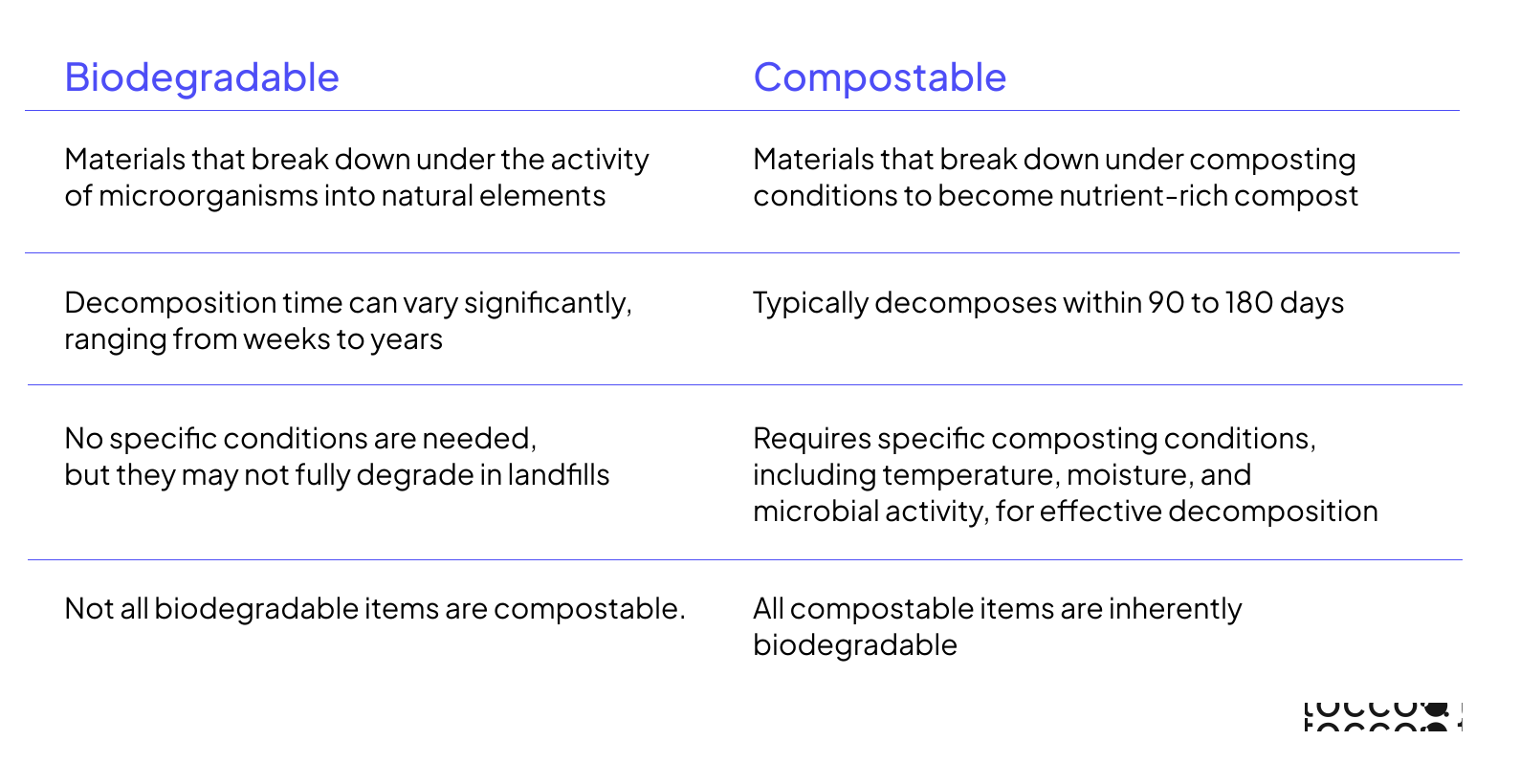
The bottom line is that compostable packaging is a more refined type of biodegradable packaging. Therefore, compostable items are a subset of biodegradable items, whereby the decomposition process is not only more predictable but also environmentally advantageous.
Why brands must understand material differences for product development and marketing
While the differences between the two might be subtle, it isn’t negligible. Thus, brands have a responsibility to understand the distinction between the two. This understanding must come to the fore when sourcing materials to ensure accurate material sourcing.
- Regulatory compliance: different materials have distinct regulatory requirements. Understanding these can prevent costly legal issues and ensure that product packaging meets industry standards and government regulations.
- Environmental impact: each material has a unique environmental footprint. Knowing the lifecycle of the materials used—from production to disposal—is crucial for minimizing the ecological impact. This knowledge enables brands to develop products that truly align with sustainability goals.
- Consumer education and trust: Clear understanding allows brands to educate their customers accurately, fostering trust. Misinformation can lead to skepticism, damaging the brand’s reputation. When brands are well-informed, they can confidently explain the benefits and end-of-life expectations for their products, which can be a strong selling point.
- Marketing accuracy: In marketing communications, precision in describing a product’s environmental benefits is essential to avoid the pitfall of "greenwashing"—making misleading claims about a product's eco-friendliness. When a brand's marketing efforts are backed by solid knowledge of material differences, the brand's integrity is upheld, and campaigns are more likely to resonate with the target audience.
At tocco.earth, brands have access to a well-curated marketplace that connects them to suppliers of various eco-conscious materials. With tocco, you can rest assured that you’re sourcing the correct material for your business, whether you’re seeking biodegradable, compostable or any other category of environmentally friendly alternative materials.
FAQ
1. Is compostable better than biodegradable?
Yes, compostable materials are generally considered a superior choice compared to biodegradable materials. This preference stems from the more controlled and environmentally advantageous nature of compostable materials.
2. Does compostable mean the same as biodegradable?
No, compostable does not mean the same as biodegradable, as they do more than just biodegrade. Compostable materials are a subset of biodegradable materials, meaning that all compostable materials are biodegradable, but not all biodegradable materials are compostable.
3. Is 100% biodegradable the same as compostable?
No, 100% biodegradable is not the same as compostable. The tag simply means the material will totally biodegrade; it does not mean you can compost it to break it down into nutrient-rich compost.
4. What is the difference between home compostable and biodegradable?
The primary difference between home compostable and biodegradable materials is that home compostable items are specifically designed to break down in backyard composting systems, whereas biodegradable materials break down more generally but with varying timeframes and conditions.
Home compostable items are suitable for personal composting, while biodegradable materials may require specific facilities or longer periods for effective decomposition and may not always result in nutrient-rich compost.
References
Info. (n.d.). Compostable plastics break down in less than 22 days in real life industrial composting. European Bioplastics e.V. https://www.european-bioplastics.org/compostable-plastics-break-down-in-less-than-22-days-in-real-life-industrial-composting/Royal
Society of Chemistry. (n.d.). Compostable and biodegradable plastics. https://www.rsc.org/globalassets/22-new-perspectives/sustainability/progressive-plastics/explainers/rsc-explainer-2---compostable-and-biodegradable-plastics.pdf
Shaikh, S. A., Yaqoob, M., & Aggarwal, P. (2021). An overview of biodegradable packaging in food industry. Current Research in Food Science, 4, 503–520. https://www.sciencedirect.com/science/article/pii/S2665927121000496?via%3Dihub