How has your background influenced your approach to footwear design?
As a kid, my family and I moved a few times between countries, nothing big but I never fitted in, no worries it didn’t bother me. This resulted in a resourceful mindset, the ability to sit still & observe, and the urge to experiment. I don’t know exactly why, but I have a big sense for rebellion; I will always find ways to do things in reverse, to go against the grain, to go off the beaten path.
On the other hand, being a free bird, doing design consultancy for brands has led me to be face-to-face with situations that go in the opposite direction of Nature’s blueprint. For example, people and brands who want to make shoes just to eventually contribute to the human garbage pile. I don’t care how much money or clout someone offers, if a project has no end use that solves a problem I will not accept it. Another example is a design-driven approach that was taught to me in school. Innovation, this sense of newness, everything has to be ‘new’.
If you look at Nature, indeed there is a constant stream of newness. Nature’s newness doesn’t originate from greed. Nature’s iterations come from serendipitous encounters, two mycelium strands of different genomes combining to make a new genome, or from adaptation to a changing environment.
Your design philosophy emphasizes materials from the natural world. What inspired this focus?
My childhood was a proper 90’s one, with the rise of gadgets like Tamagotchi & Poly Pocket. Things my parents would never support. So I ended up floating for hours in the sea observing sea anemones, running around the caves of a small mountain peak, making sandcastles on the school playground, and inventing adventures with elves & magical spirits in the woods. I don’t think it gets more complicated than that.
In your view, how do sustainable materials in footwear offer unique properties compared to traditional materials?
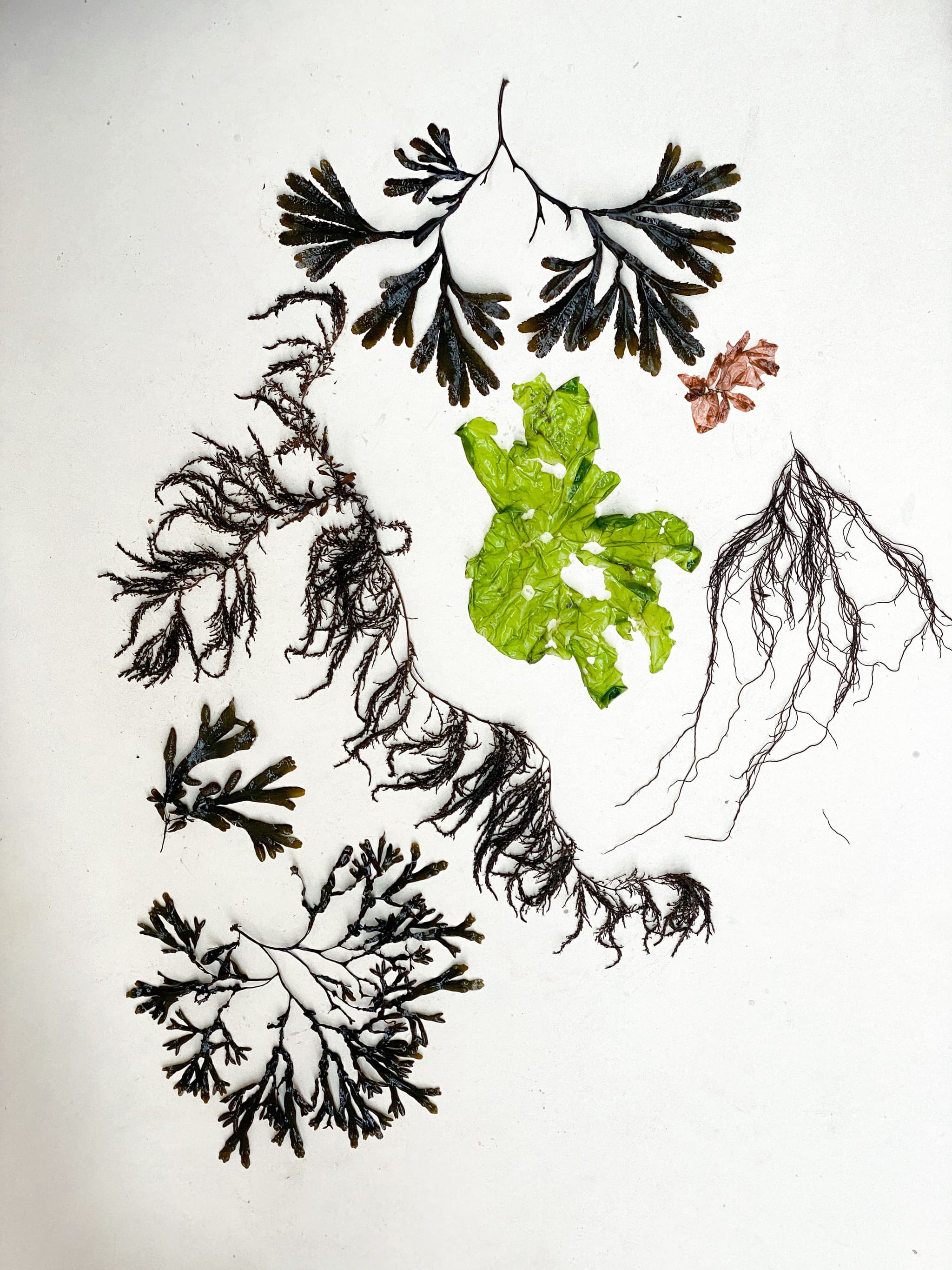
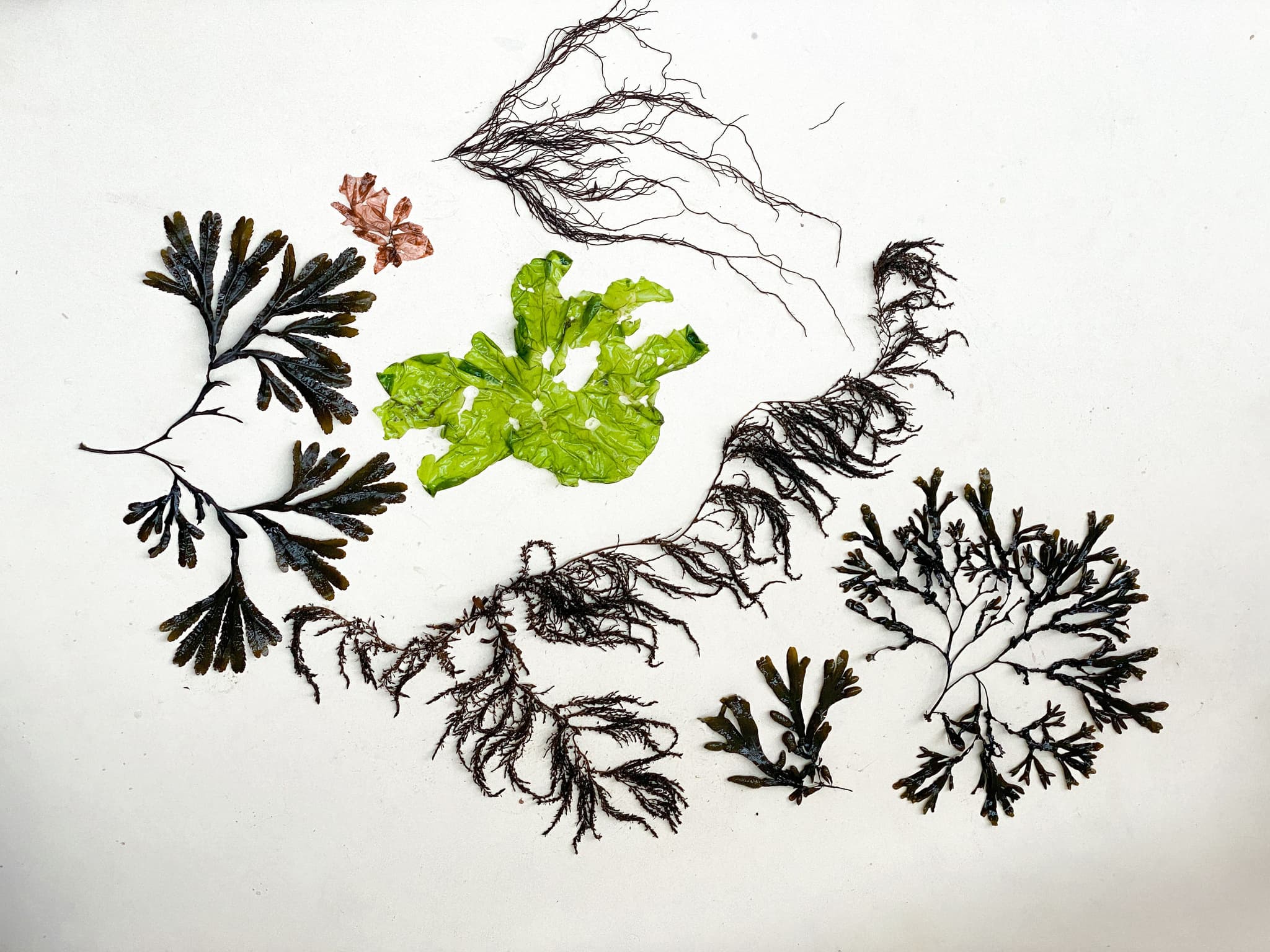
The aesthetics. We are so used to everything looking perfect, polished, shiny, geometric, and repeating, while in Nature shapes seem to be repeating but never exact. Natural materials – when unprocessed – have that double depth as you encounter with Natural species. A leaf is never a single Pantone code of green, it probably has more shades of green than the Pantone book has. It is that sensorial wealth that calms you through your eyes, ears, and touch. Aesthetics alone would sell the material and origin short. If we only focus on that, organic materials will never outperform a synthetic solution.
Very important here is that the natural material really brings out the uniqueness of the original source. Trying to force-fit organic fibers and elements to have the properties of another one only generates a loss of trust in natural materials. There are numerous examples of materials pretending to be animal leather, which of course underperform and end up being a PR stunt.
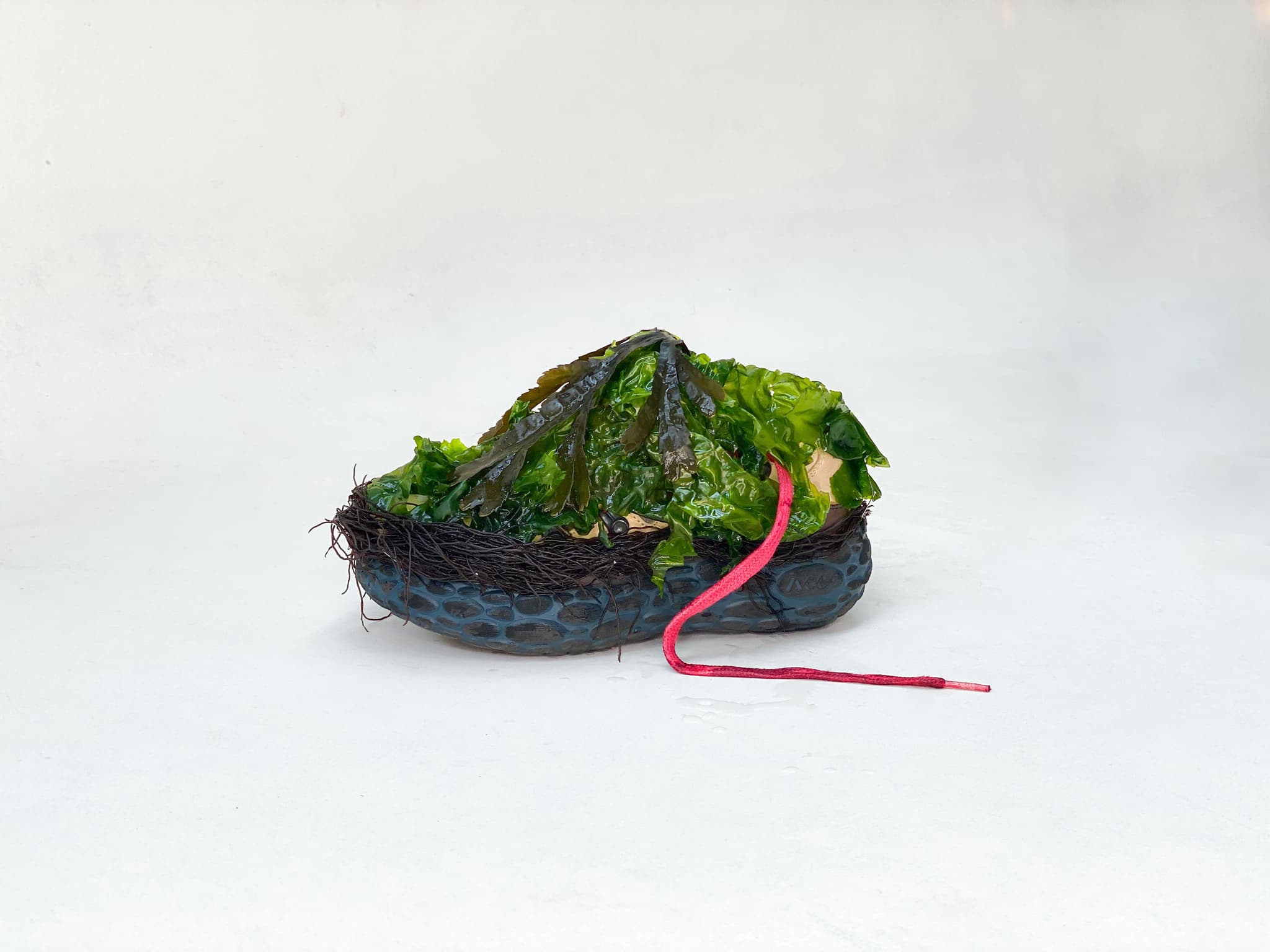
Why don’t we take a step back and look at what the fiber, the component, does for the species where we get it from? For example, if it is light and water repellent for wide seed dispersal we can look for constructions to bring out those properties in let’s say, a hiking shoe. And believe me, our technology, the tools, and the processes we developed over the last century are advanced enough to handle it. We just have to put M(aterial) and T(echnology) together. The fun part is, if we do this well, naturally new aesthetics and shapes will come forth and you basically created a new footwear design through the material selection.
How do you blend sustainability and unconventional materials while ensuring commercial viability for brands?
Change happens best with lots of little steps. Nature never changes a species, a phenomenon radically. Nature changes all of those at a constant pace, little by little, on all levels of the organism. Commercially you want to change just enough so you can see that the product, the shoe, or the material looks different than the one before. If you change too much at once, human people will perceive it as weird and foreign. Secondly, it depends on the audience. Some customer groups only perceive big changes as ‘new’ or exciting, for other customers the use of a bright color is already a big change.
In Nature, every little change is reviewed, either because the seed for example doesn’t germinate or the organism doesn’t survive. The same should go for introducing new materials. Introduce a constant feedback loop of trial, observation, evaluation and then adjust the system correspondingly so next time it will be better. This is for every step along the way, the first touch with the material, the wear testing of the samples, and the person wearing the shoe sending the shoe back for repair, ideally until the material in the shoe doesn’t exist anymore and is composted or spun into new yarns.
What do you hope to achieve by working with these materials in footwear concepts? How do you envision these designs influencing the industry as a whole?
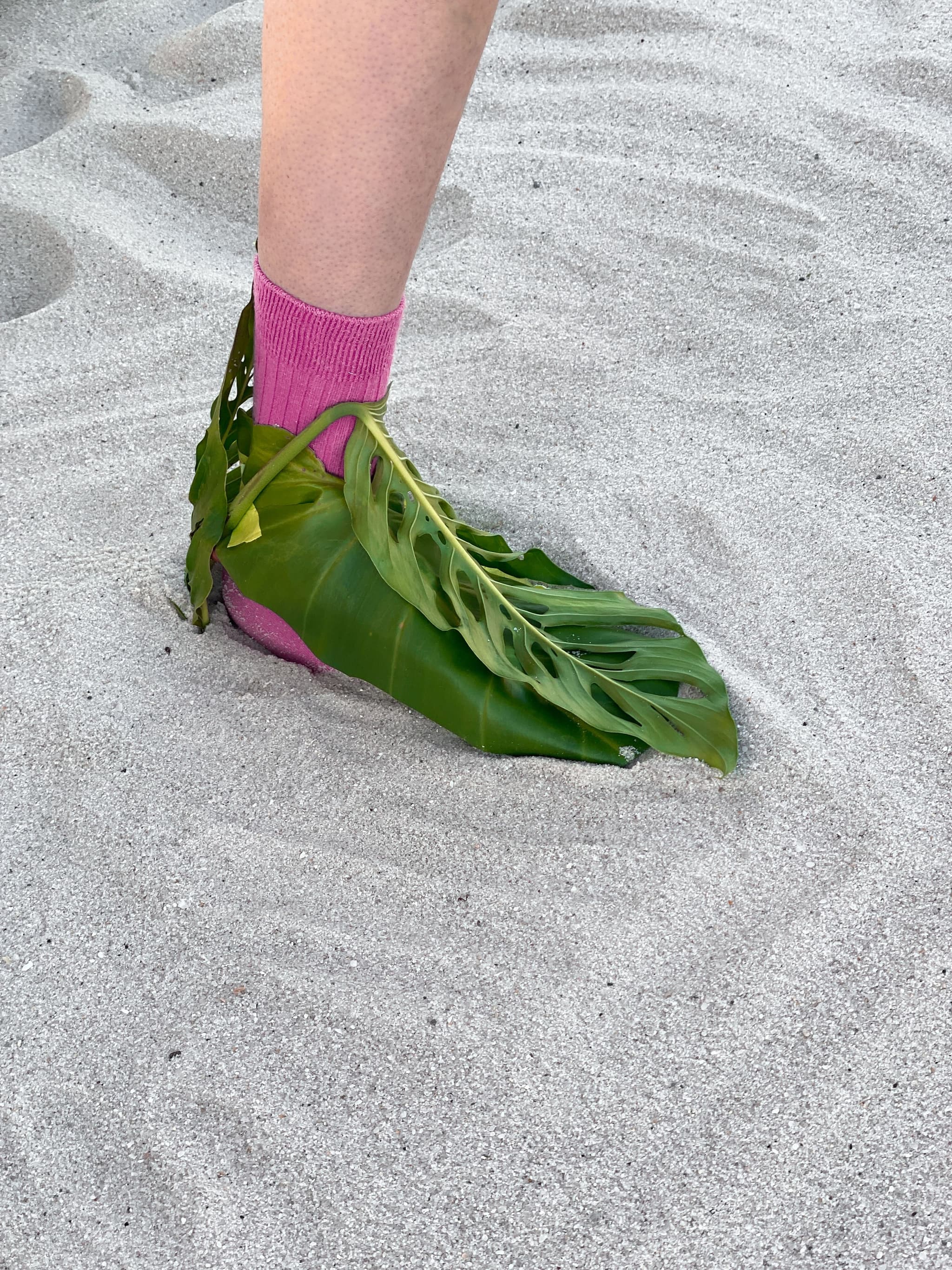
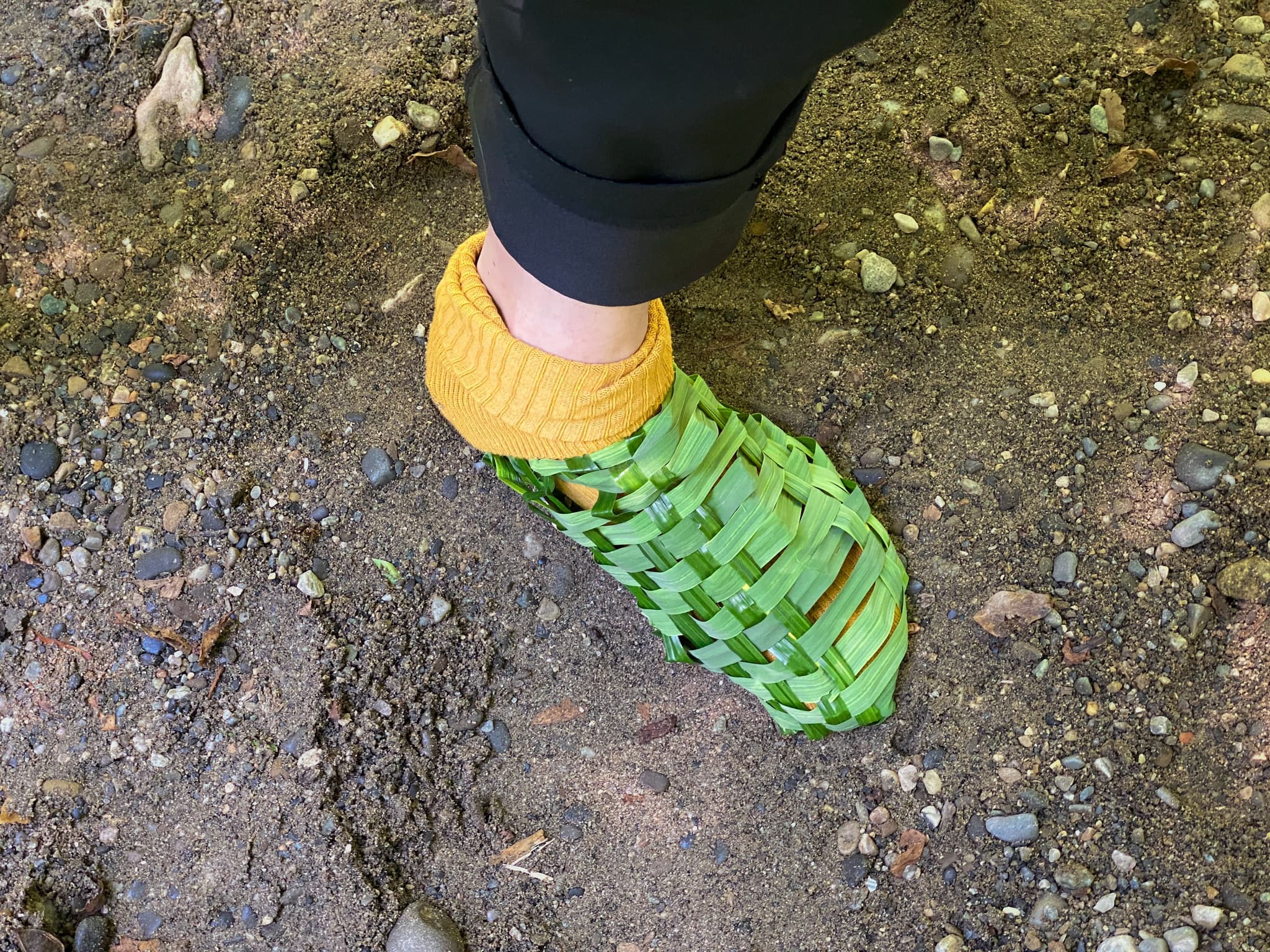
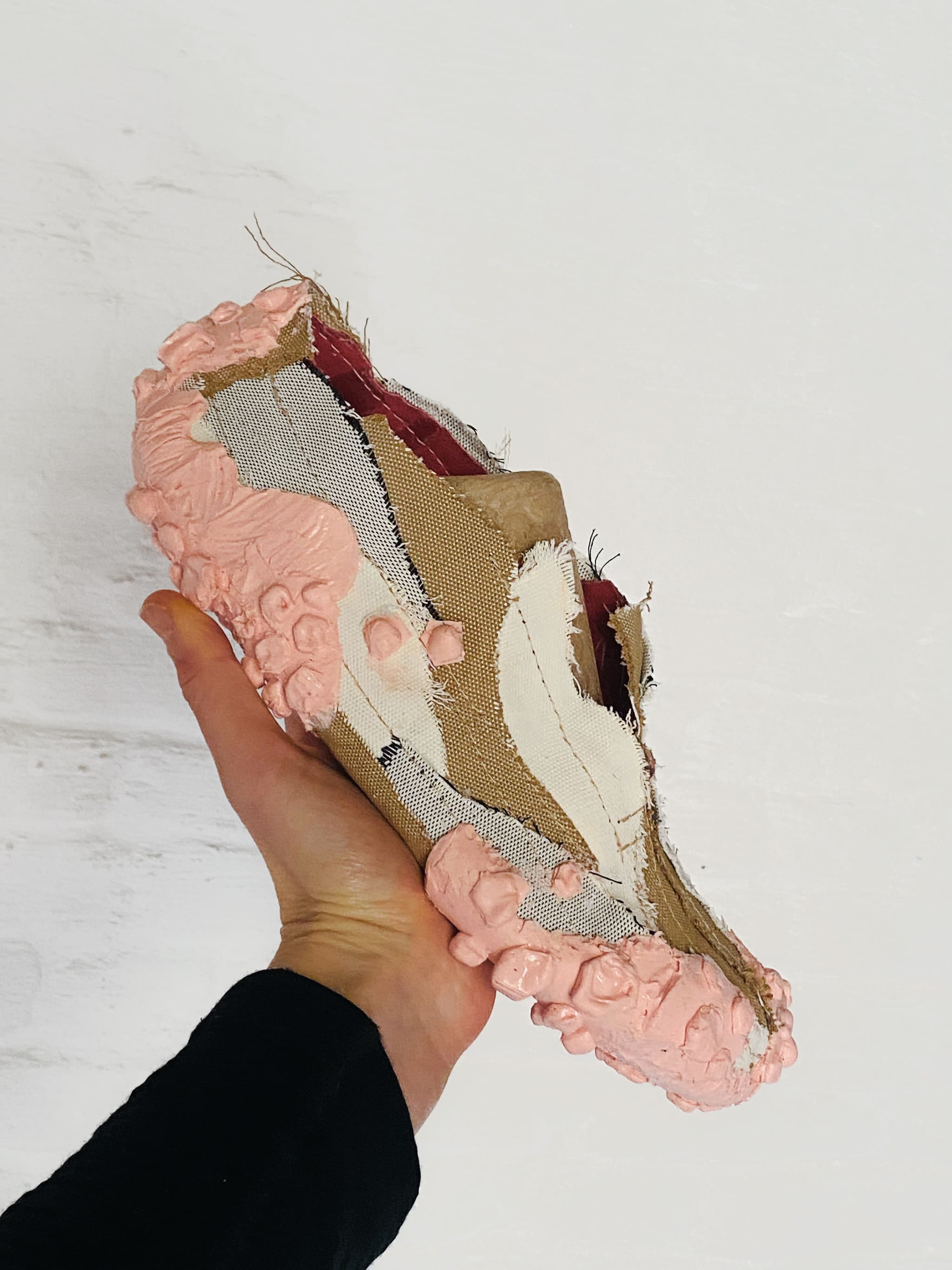
The concepts I show online are primarily just me playing around. When I walk in any biome, I observe, stand still, sit down, and check out a leaf, a pebble, anything really. From there I would discover a slime mold, a texture, or my imagination derails and I see a parallel world in a patch of moss. It is astonishing what you see if you change your position!
In general, we walk upright and follow a path or a direction from an app.
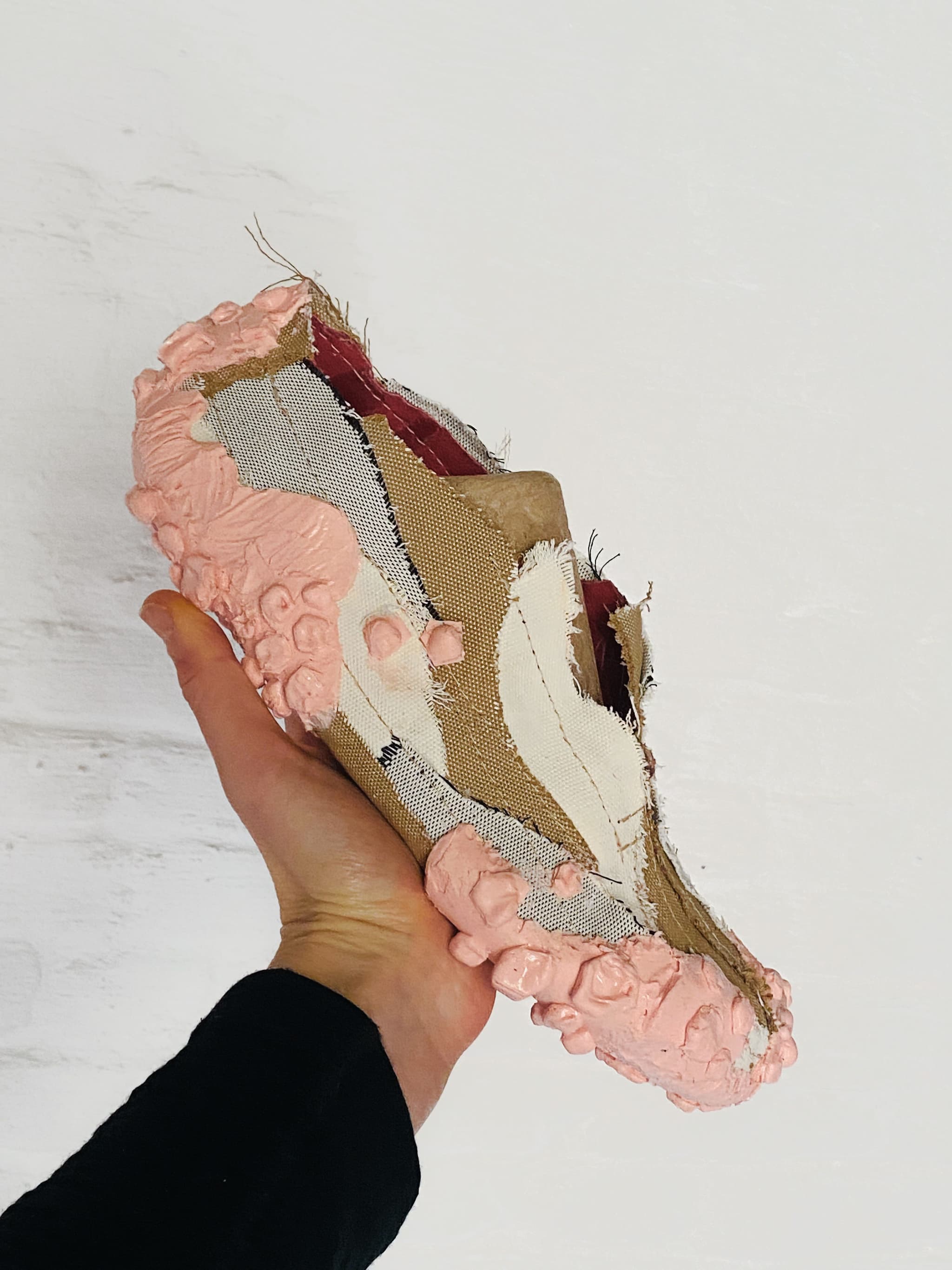
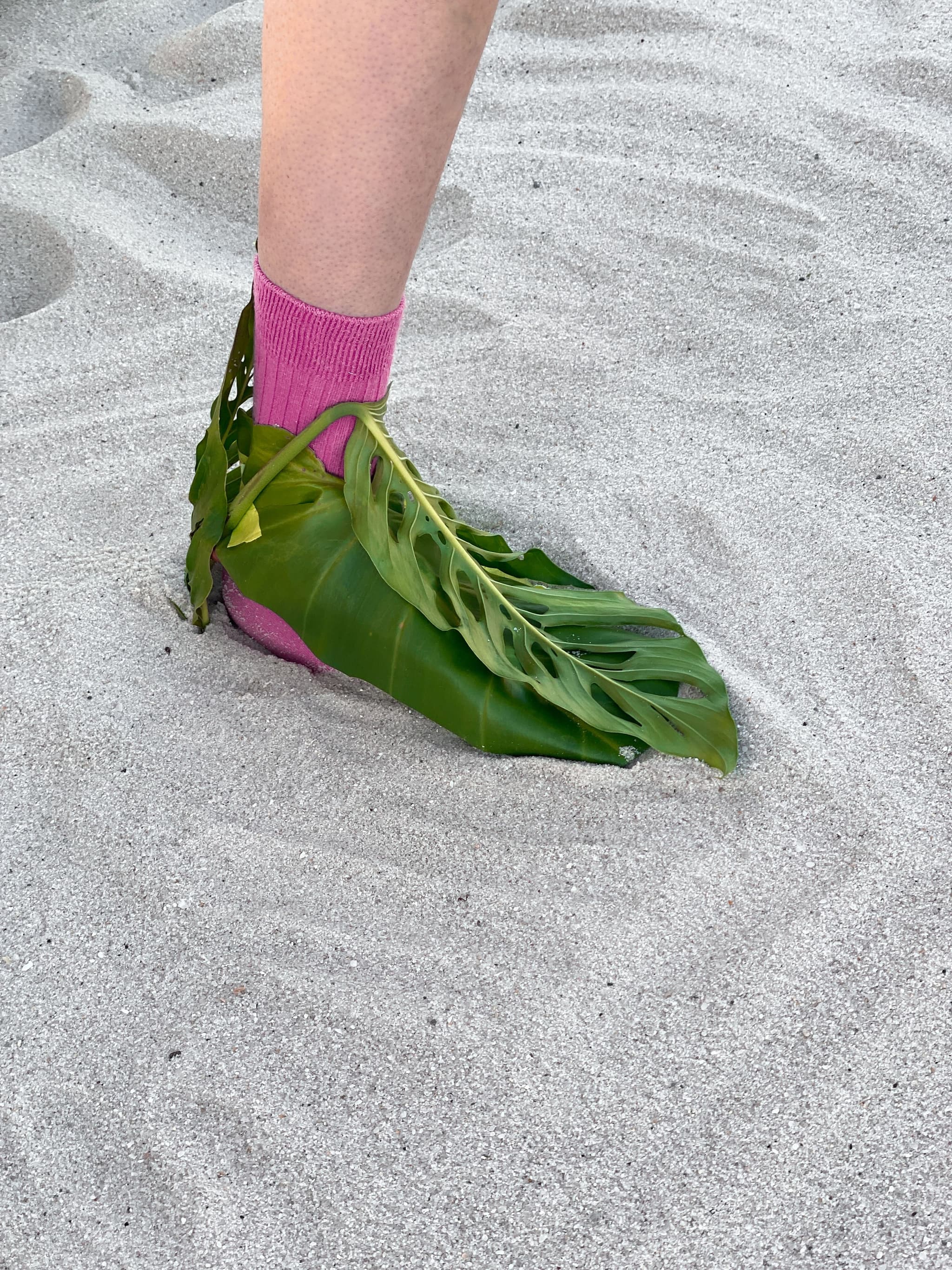
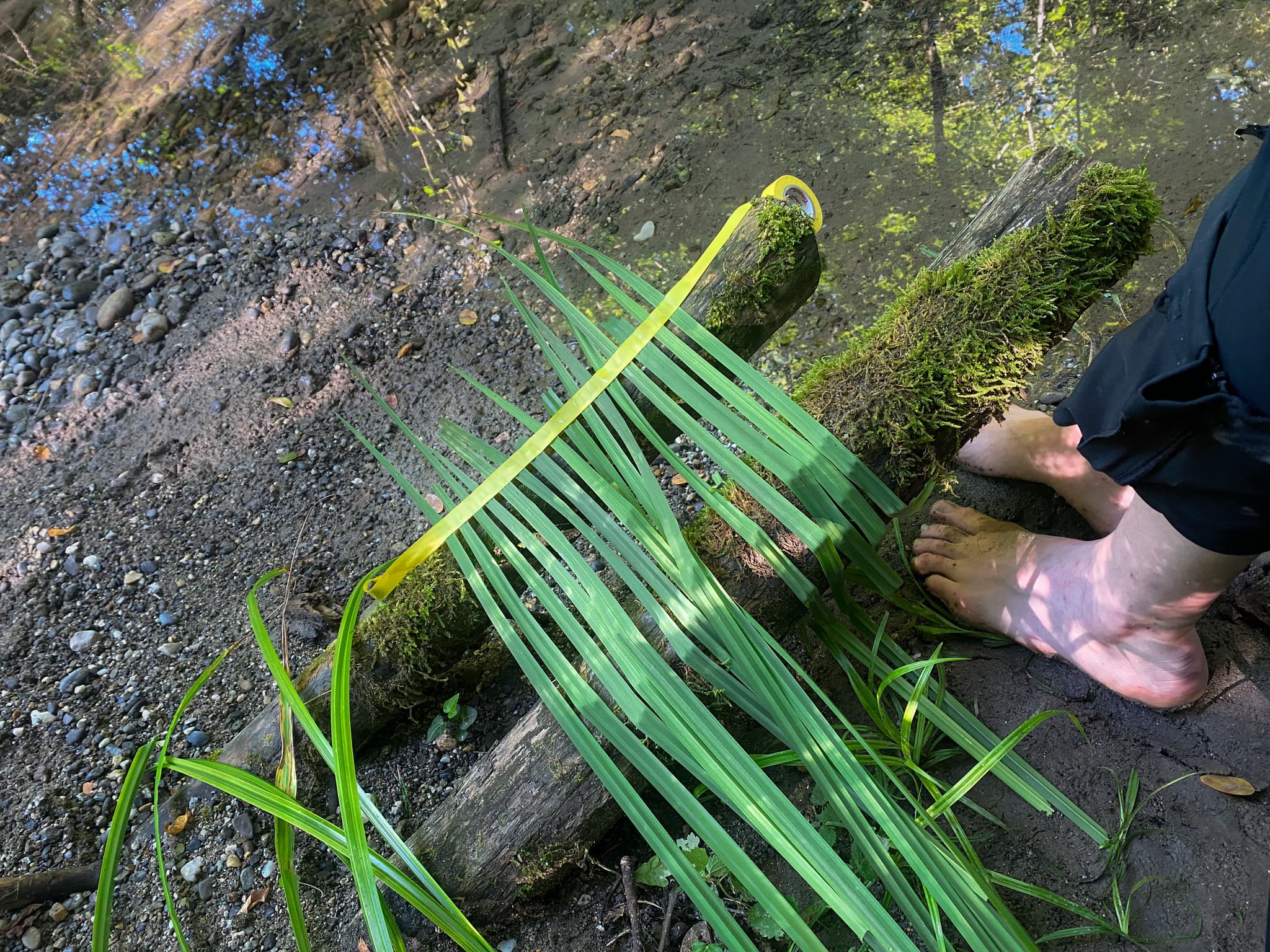
The foot-covers or footwear concepts are a way for me to understand the Natural elements beyond the visual. As soon as you pick one up it will ‘tell’ you without words how it can help you shape a foot-cover. You turn the wild grass leaf around and discover an interesting backside, you pick up moss and it starts to shrink, imperfectly shaped cobbles fit perfectly between the bumps of your toes, etc. I learn to ‘talk’ with Nature. Sidenote, always follow the laws of foraging, and do not take anything home, you don’t need it.
I hope to transfer this way of ‘listening’ to the development of organic materials and the application of those materials to footwear. Ultimately I want to show everyone this way of learning from Nature. It would be awesome if others would start copying me, go to wild natural environments and compose hats and bags or even their cars. Recently I started taking these walks with design teams!
The physical making of footwear is just the start, the tangible and visual way of showing how to adopt Nature’s lifestyle. My goal is to apply this way of including Natural systems & species to the team to all the layers of a company and, even more important the relations between companies. Eventually it will change how groups of people work together.
What are the challenges that the industry faces when striving for sustainable practices, and how should industry players navigate these challenges?
One of the biggest challenges is the readiness of new materials. Not only on the level of performance of the material itself, also on the scale of production & fitting into current supply chain systems.
Collaboration between the industry players is crucial, vendors and clients should become 1 team per project and operate with a high level of trust. The more companies of different tiers and even competitors really work together and share best practices the faster developments will be successful!
Talking about general sustainable practices I believe a lot is in the use of words. Language creates reality, and language primes our mindset because language is the superpower of human people. Sustainable means “able to be maintained at a certain rate or level”. Do we want to keep things at this level? No, we want to make the world a vibrant, abundant place, correct? Why don’t we use fun, aspiring words?
For example, we talk about the EOL, the End-Of-Life of products. Automatically it is the last thing we will work on because the word ‘end’ is in there. It also implies something sad because nearly globally the end of a life/death is a sad thing that we quickly want to forget. So I call this stage ‘Next-Life’ or the skill of the product to ‘Shapeshift’. This puts you in an imaginative mindset, everyone wants to know what happens in the next episode and creators can’t stop the urge to invent that next stage!
Oh, I would like to conclude this interview by encouraging your readers: Make, make, make, and every time you make something, you experience the challenges of making, you will discover unintended ideas, and the results will give you 1000 more teachings than sitting in a meeting planning and speculating.