Launch Offer

Join our mission to decarbonize the planet through better materials

Laura Messing’s Bioart Revolution: Moebio® Bioleather and Biodegradable Sculptures
BIOMATERIALS

Laura Messing’s Bioart Revolution: Moebio® Bioleather and Biodegradable Sculptures

Discover Laura Messing’s work with Moebio® bioleather and biodegradable sculptures, reshaping sustainable art by using eco-friendly materials to address environmental challenges.

LMLaura Messing
Oct 25, 2024
16 mins read
11.2K views

Your installations and sculptures often use biodegradable materials. Can you discuss the process and challenges of working with these materials?

Until 2017, my work did not fully account for the extent of contamination involved in its materiality. Although I was aware of environmental contamination issues, I mistakenly believed that art was exempt from such responsibilities. Gradually, I began to actively educate myself on this topic and sought out non-polluting materials for my work.

Today, I focus on compostability, not biodegradability, as it is a clearer and more measurable concept. I aim for 100% domestic (not industrial) compostability as a starting point.

The challenges are significant. First, we must see ourselves as individual agents of change, beginning with education and responsible research. Next, it is crucial to communicate the importance of adapting to drastic environmental changes and to understand our roles as artists and designers in responding to these changes.
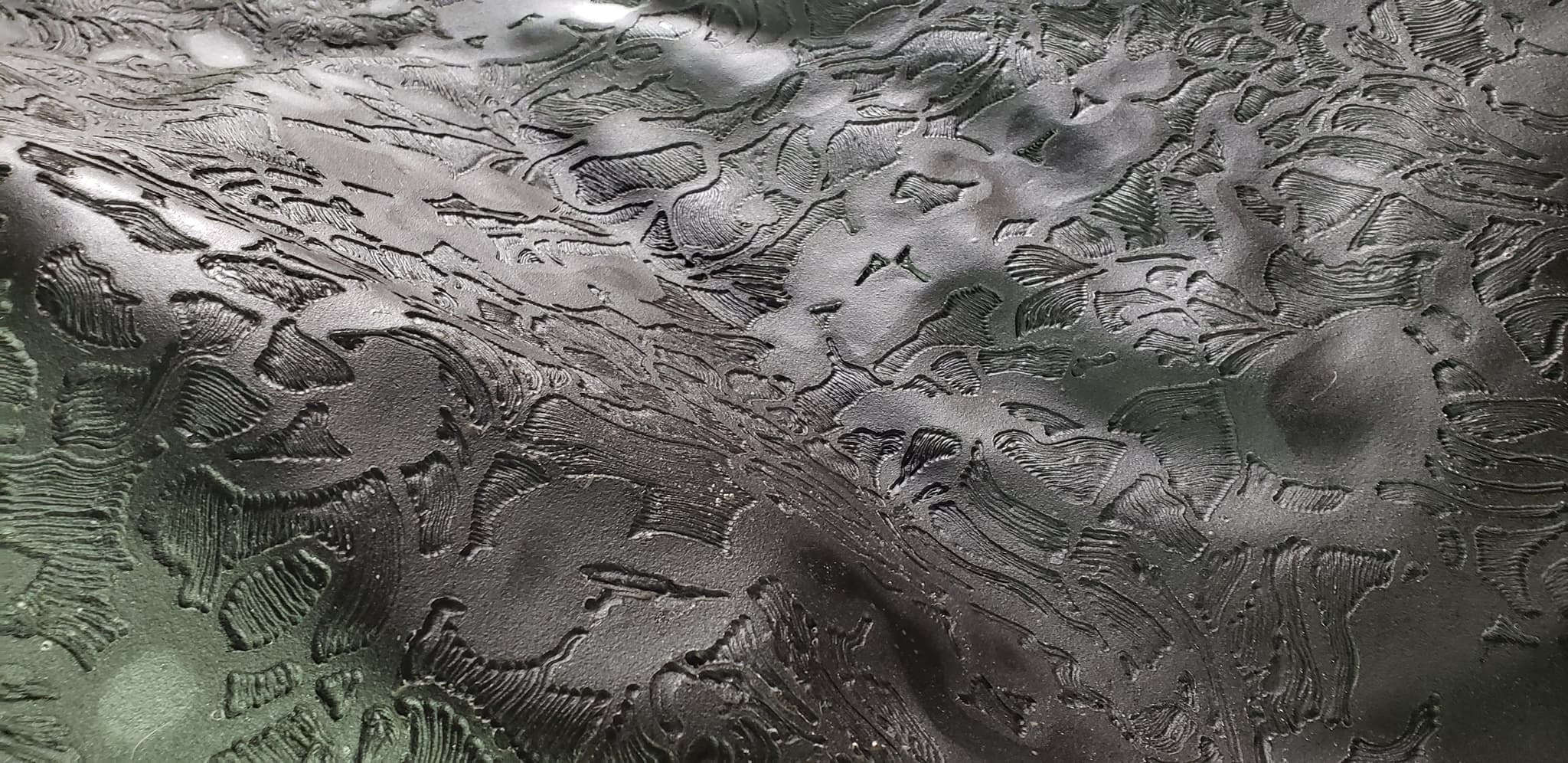
 MOEBIO bioleather, 100% non-polluting, and non-extractivist.
MOEBIO bioleather, 100% non-polluting, and non-extractivist.

Your bioleather project, Moebio, uses plant and bacterial cellulose from kombucha. Can you detail the scientific process behind creating bioleather from kombucha cultures and the specific challenges you encountered?

The process for Moebio bioleathers, as for any biomaterial I intend to produce, consists of starting with a simple formulation and applying the method of iterations — that is, 5 to 10 tests modifying one parameter at a time in appropriate proportions. The best results are then subjected to resistance tests under different demands.

From these values, the necessary steps are modified again to reach the appropriate result for a specific need.
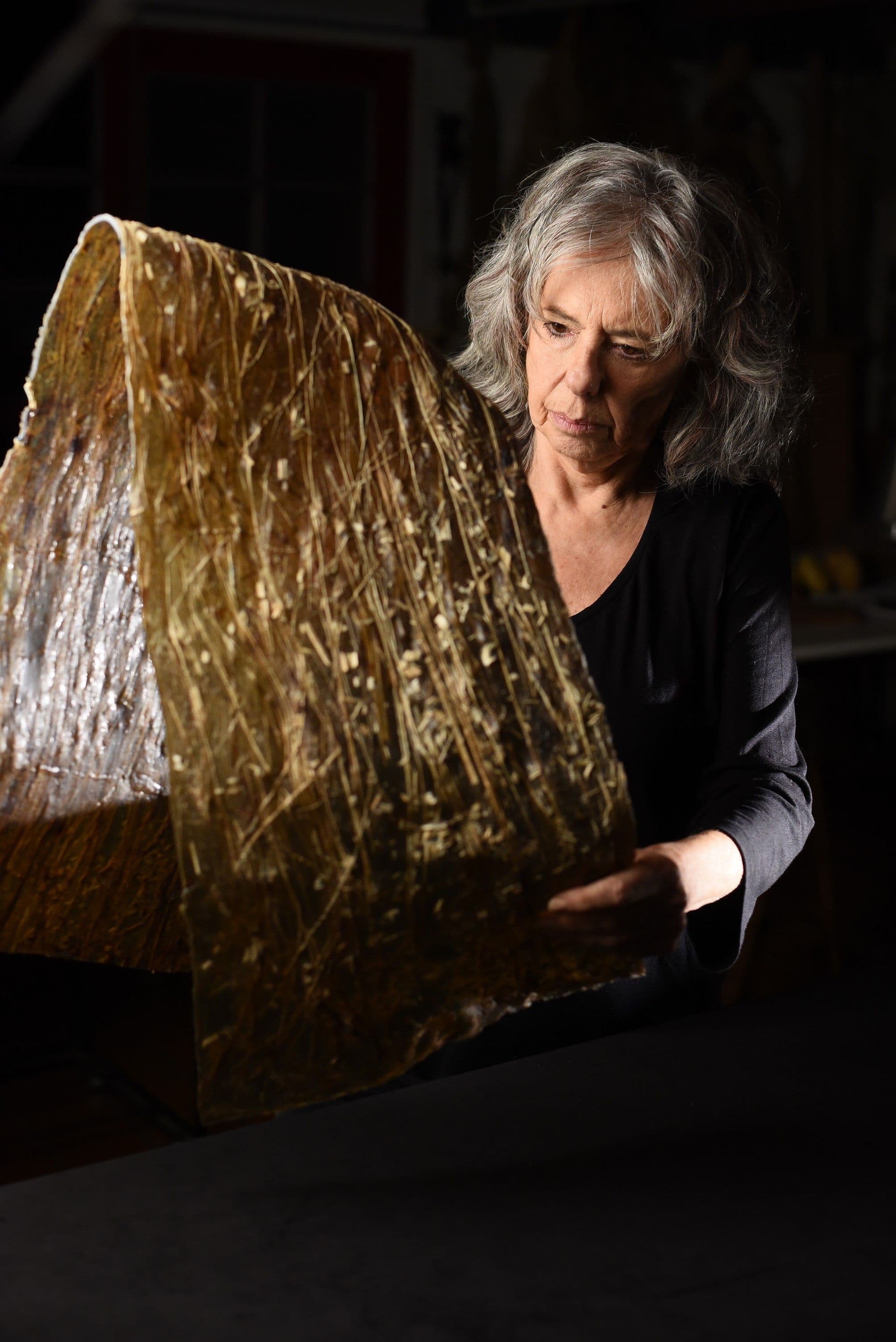
 Laura Messing with her creations
Laura Messing with her creations

Can you explain the techniques you use to integrate biomaterials into your sculptures, and how you ensure these materials maintain their structural integrity over time?

I don’t expect biomaterials to last as long as plastic since the duration of plastics is a problem in itself. We should reconsider the assumption that what lasts is good and what doesn’t last is not, and instead consider the entire life cycle of a material.

For example, plastic can be useful for a few hours and then remain for thousands of years as garbage and pollution. Animal leather can last for many years but with an excessive amount of contamination in its initial tanning. Biomaterials, in different versions, are produced to last perhaps 5 years, perhaps 100, but after that time, they will become fertile land. So, we could talk about an eternal duration at the service of nature. It is the points of view that we should rethink, perhaps.
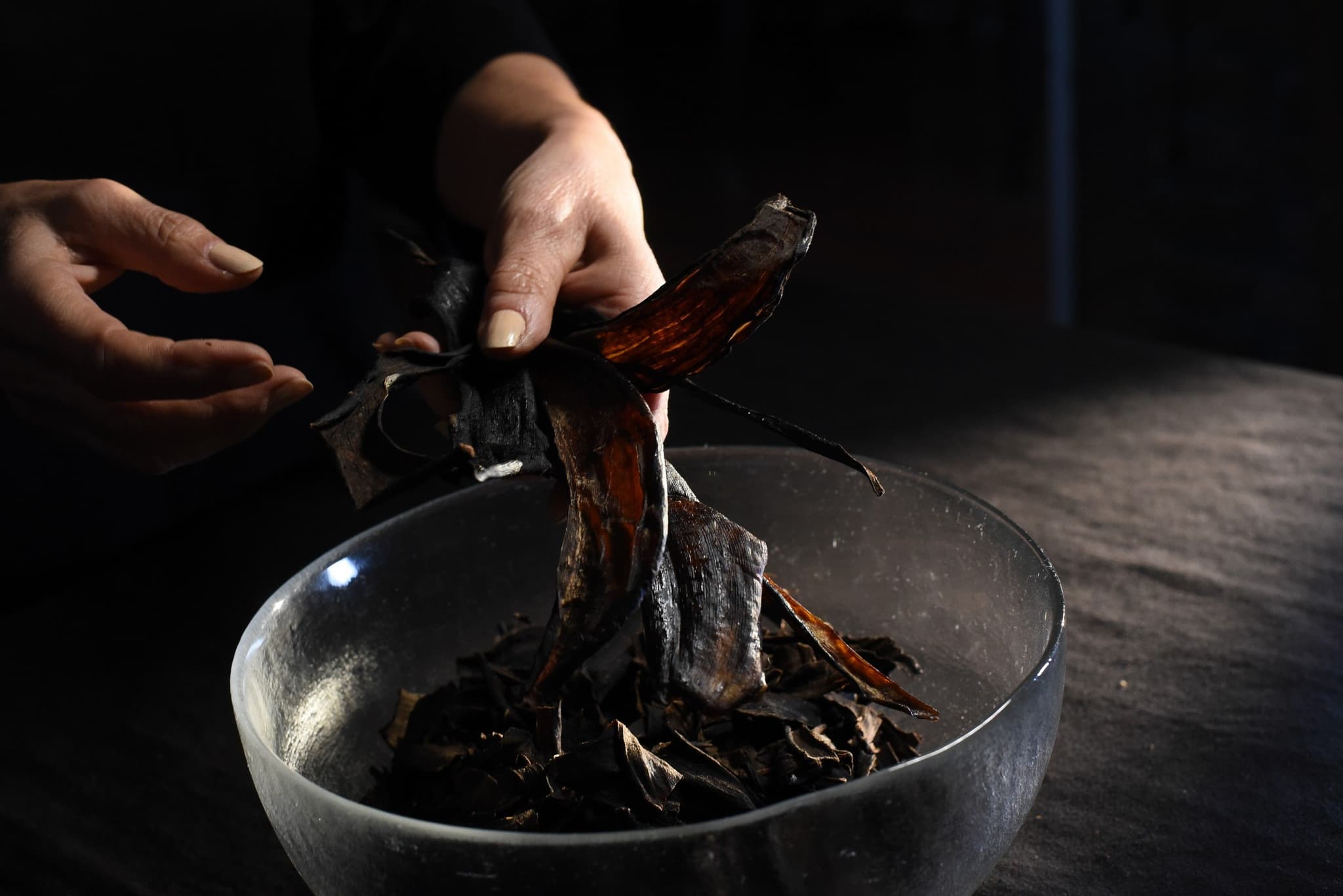
 "Biomaterials, in different versions, are produced to last perhaps 5 years, perhaps 100, but after that time, they will become fertile land."
"Biomaterials, in different versions, are produced to last perhaps 5 years, perhaps 100, but after that time, they will become fertile land."

In what ways do you think the art community can contribute to the discourse on climate change and environmental justice?

The artistic community always contributes to metabolising and reacting to the reality in which it lives. At this moment, beyond the way each artist proposes, what I suggest in my talks is to take charge.

What do I mean by this? Symbolic language falls short in the face of the urgency of the disaster. The image of the orchestra playing on the deck of the Titanic is well known. I propose to help assemble the lifeboats.
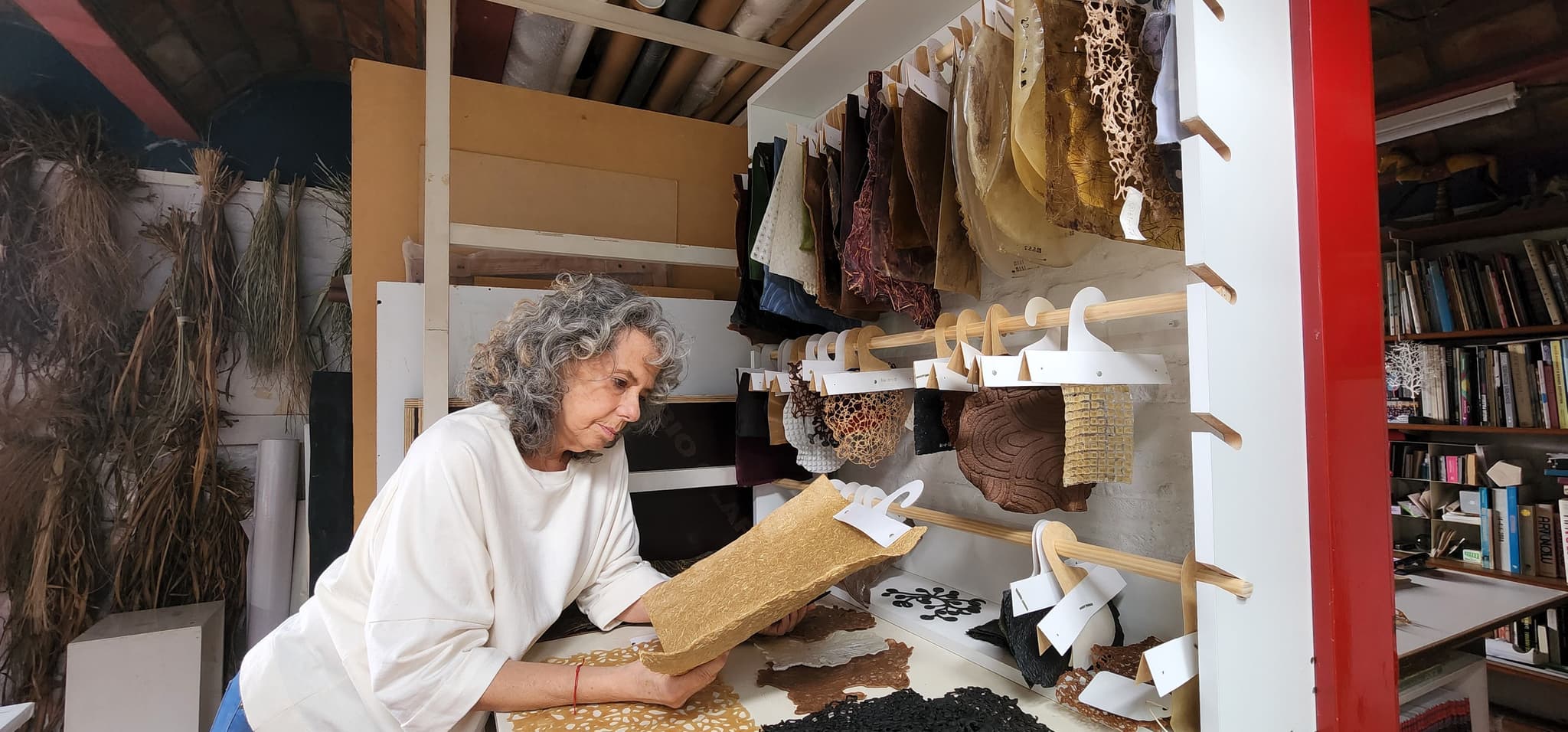
 Laura Messing with her MOEBIO bioleather
Laura Messing with her MOEBIO bioleather

When collaborating with scientists and tech companies on sustainable materials, what key technical criteria do you consider to ensure the materials meet your artistic and environmental standards?

There are no technical criteria or standards anymore for art to remain art. If it reaches people, it is art; if not, it is not. Regarding the environment, we propose many things. To summarise: first, not harm. Then, understand what is harmful and why. Third, take the simplest, cleanest solution with the lowest possible energy expenditure and carbon emissions.
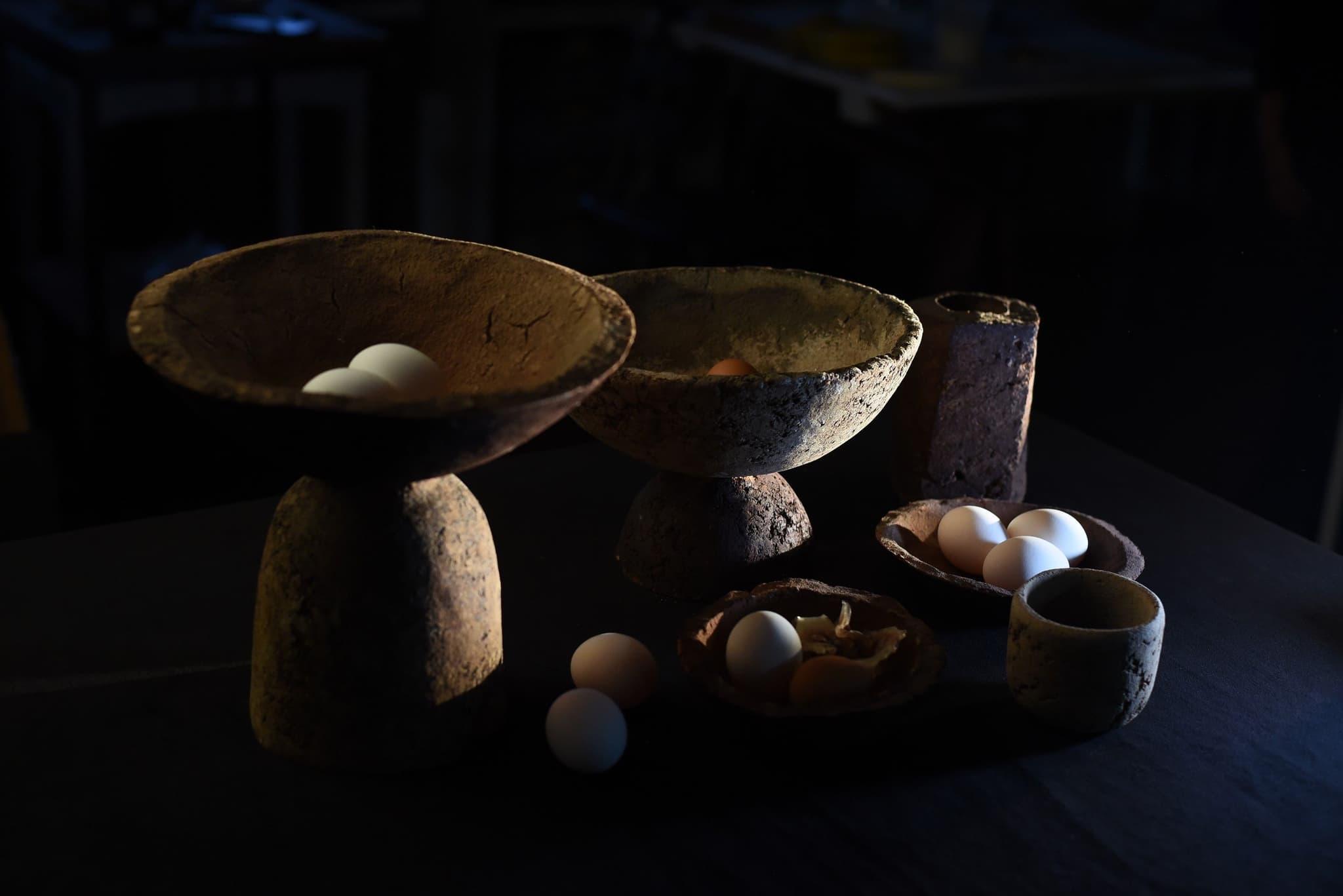
 Bioceramic made from eggshells, sawdust and alginate, and 100% compostable, by Laura Messing.
Bioceramic made from eggshells, sawdust and alginate, and 100% compostable, by Laura Messing.

As the founder of Escuela de Proyectos and organiser of the Platt Award for the Arts, what advice would you give to emerging artists focused on environmental and sustainable themes?

They should be informed and move away from individualism because today, the personal name is no longer what matters.

Art must be linked to science; otherwise, it is not sufficient. They should group, form collectives, and make concrete proposals and actions. They should also consider that if their works contaminate or the waste from their works contaminates, if the inputs are contaminating, that contamination invalidates the meaning.

BiomaterialsBiodegradableSculpturePlant-basedBiofabricationTextile
LM

Laura Messing

Laura Messing is an internationally renowned artist who began her career in the mid-1980s, after studying architecture at the University of Buenos Aires. Her recent work explores the artist's role in political, socio-economic, and cultural processes impacting the natural environment. Messing's art, centered on environmental justice, climate change, and sustainability, uses biodegradable materials in installations and sculptures to advocate for better human interactions with nature. In 2020, she founded MOEBIO®, a green company that collaborates on innovative, eco-friendly projects. Messing is a leading figure in sustainable art and design with biomaterials.

GALLERY

LATEST INSIGHTS

Discover all our latest reports

Tocco Report: Marine Materials 2030
Marine & Aquatic

Tocco Report: Marine Materials 2030

This Tocco Report follows that transformation across five chapters. Part I examines ocean waste and its recycling into new material flows. Part II focuses on algae and their rapidly scaling bio-based chemistry. Part III turns to shells, chitosan, and fish skins as building blocks for biopolymers and leather alternatives. Part IV examines aquaculture as a biomass platform for food, fertilisers, and next-generation materials. Part V closes with the forces of the sea: energy, minerals, and current-driven systems that unlock power densities far beyond solar or wind. Together, these perspectives form a panorama of how ocean industries are scaling from niche experiments to critical infrastructures.

Tocco Guide: Packaging Compliance⋅Quick Guide for 2026
Regulation

Tocco Guide: Packaging Compliance⋅Quick Guide for 2026

Packaging compliance quick guide for 2026: an excerpt from The Global packaging compliance handbook for 2026, covering the regulatory shifts moving into enforcement across Europe and beyond. A practical overview of recyclability scoring, recycled-content thresholds, EPR obligations, labelling and chemical restrictions, plus the key timelines and actions brands and suppliers need to prioritise for market access in 2026.

Tocco Report: The Global Packaging Compliance Handbook for 2026
Packaging

Tocco Report: The Global Packaging Compliance Handbook for 2026

The Global Packaging Compliance Handbook for 2026 explains how PPWR, PFAS bans and Extended Producer Responsibility rules are being enforced across Europe, the US and Asia. A practical guide for brands, packaging teams and compliance leaders.

Tocco Report: EU PPWR: The Definitive Implementation Guide 2026-2040
Packaging

Tocco Report: EU PPWR: The Definitive Implementation Guide 2026-2040

This report by Tocco editorial team distils the final legislative text, technical annexes, and early industry responses into 5 operational pillars: recyclability grading, recycled content, reuse, waste minimisation, and chemical safety of EU PPWR. Our aim is simple: give decision-makers a clear view of what changes between now, 2030, and 2040 – and the detail they need to act in order.

Laura Messing’s Bioart Revolution: Moebio® Bioleather and Biodegradable Sculptures | Tocco.Earth