Key Points
- High-aspect-ratio, charged CNCs reinforce matrices, lift barrier and tune rheology in coatings, packaging and personal care.
- Amphiphilic particles enable Pickering emulsions, cutting synthetic surfactants in cosmetics, pharma and paints.
- Grade control: 110L for transparent films/printed electronics; 100L/100P for thickening in paints and industrial fluids.
- Composites: kevlar-like reinforcement in hybrids delivers lightweight, bio-based strength (not a drop-in Kevlar™ substitute).
- Scale & sustainability: PEFC-sourced pulp, Windsor (Québec) commercial plant, Innovation Hub for scale-up; biodegradable CNCs underpin recyclable barriers (e.g., CelluShield™) and circular design.
Full interview with CelluForce
1. How do cellulose nanocrystals (CNCs) such as CelluRods® enhance product performance across industries?
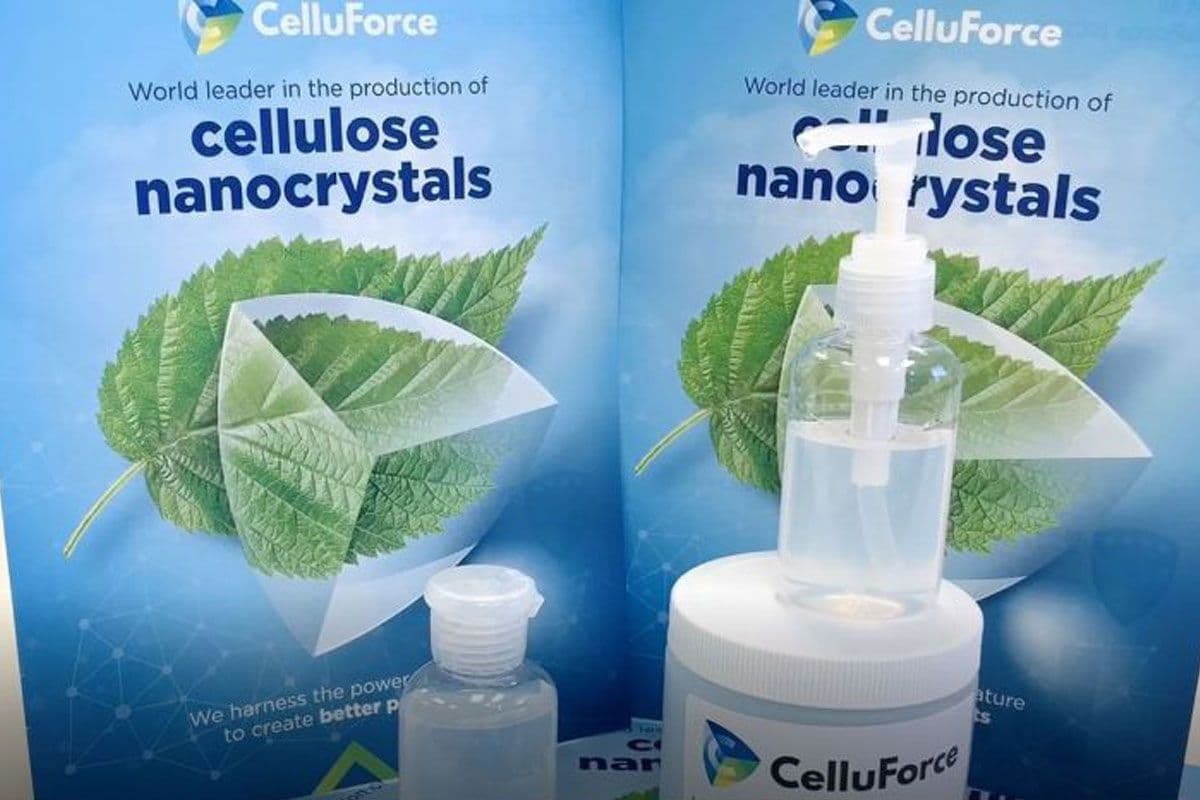
CelluRods® are high-performance cellulose nanocrystals (CNCs) derived from wood pulp, offering exceptional mechanical strength, high aspect ratio, surface charges, and large surface area. These attributes make CelluRods® ideal for reinforcing diverse materials, improving barrier properties in packaging, enhancing rheology control in paints and coatings, and stabilizing formulations in personal care. Their nanoscale precision also suits advanced applications like printed electronics, composites, and 3D printing where performance at small scale is essential.
2. CelluRods®’ key feature is resistance comparable to Kevlar™. How might this be integrated into industries currently using high-performance materials like Kevlar™?
CelluRods® offer exceptional tensile strength and stiffness, making them valuable in high-performance composites. While not a direct Kevlar™ substitute, they can reinforce hydrophilic media to create lightweight, strong, and bio-based alternatives. Hybrid composites combining CNCs with other fibers can reduce weight, maintain durability, and boost performance, appealing for automotive, construction, and protective gear applications.
3. CelluRods® exhibit both hydrophobic and hydrophilic properties. How do these dual characteristics benefit emulsion formulation and stabilization?
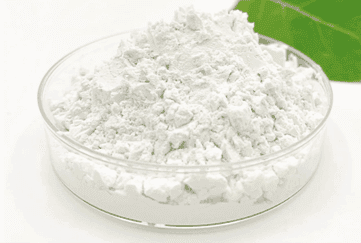
While predominantly hydrophilic, CelluRods®’ amphiphilic nature allows them to adsorb at oil–water interfaces, enabling emulsion stabilization without synthetic surfactants. This is ideal for cosmetics, pharmaceuticals, and paints, where clean-label formulations are in demand. Their ability to form Pickering emulsions also ensures long-term stability and reduced synthetic input.
4. How do you ensure the production of CelluRods® remains environmentally responsible while scaling up?
Sustainability is foundational. CelluForce sources pulp from PEFC-certified forests and uses an energy-efficient process that minimizes water and chemical use. As demand scales, investments in closed-loop systems and lifecycle analysis ensure responsible growth. Our Windsor, Québec facility is optimized for industrial-scale production under stringent environmental controls.
5. How do varying particle sizes across different grades of CelluRods® influence their functionality in specialized applications?
CelluRods® come in multiple grades with varying particle sizes. Finer grades (e.g. CelluRods® 110L) are ideal for transparent films or printed electronics. Coarser or spray-dried versions (e.g. 100L, 100P) are better suited for thickening agents in paints or industrial fluids. By adjusting particle size and formulation, we help clients tailor properties like rheology, barrier function, or optical clarity to their needs.
6. How does CelluForce plan to scale production of CelluRods® to meet growing global demand?
We operate the world’s first commercial-scale CNC plant and are expanding through the CelluForce Innovation Hub, which integrates R&D, pilot production, and analytics. New regional partnerships and plans to increase plant capacity will ensure decentralized, scalable production and resilient logistics.
7. How do you educate and assist customers in understanding the applications and benefits of CNCs?
Education is central to market development. We offer hands-on technical support, application notes, and collaborative pilot projects. By partnering with R&D teams, we help tailor CNCs like CelluRods® for specific outcomes, ensuring successful adoption across industries.
8. Could you provide insight into the R&D process behind creating new grades of CNCs and staying ahead of industry needs?
Our innovation pipeline is co-developed with customers, academic partners, and industry stakeholders. We focus on formulation compatibility, matrix integration, and new CNC composites for sectors like packaging, personal care, and electronics. The Innovation Hub accelerates rapid prototyping and scale-up.
9. How do you manage the lifecycle and end-of-life processing of products made with CelluRods® to minimize environmental impact?
We don’t make end products, but we enable sustainable design. CelluRods® are biodegradable and renewable, allowing users to develop products designed for recycling, composting, or safe degradation. We collaborate with clients to ensure lifecycle-conscious formulation and circular use of CNCs.
10. What new applications or industries are particularly ripe for disruption with CNCs like CelluRods®?
We're seeing strong momentum in several sectors ripe for disruption with CNCs like CelluRods®. In recyclable packaging, CNCs enhance barrier properties, exemplified by CelluShield™, a novel coating that enables the recycling of flexible plastic. In agriculture, CNCs serve as bio-based additives that can boost crop performance naturally. In the biomedical field, their biocompatibility opens doors for advanced wound care and drug delivery systems. Meanwhile, in rubber and composites, CNCs help reinforce materials while reducing dependence on fossil-based content. These applications all align with the rising demand for circularity, low-emission solutions, and safer chemistries.