1. The Ibuju collection revolves around the use of Yaré fibre. What are the key material properties of Yaré that made it suitable for furniture construction, and how did you validate its structural performance?
Yaré fibre, native to the Amazon rainforest, grows by entwining itself around trees and regenerates easily once harvested. This characteristic makes it an eco-friendly, renewable material. Our aim with Ibuju was to promote the use of locally available resources and avoid the environmental cost of importing similar materials like rattan or wicker from Asia. Surprisingly, Yaré shares many of the same physical properties, yet it remains underutilized in Colombia due to a lack of awareness.
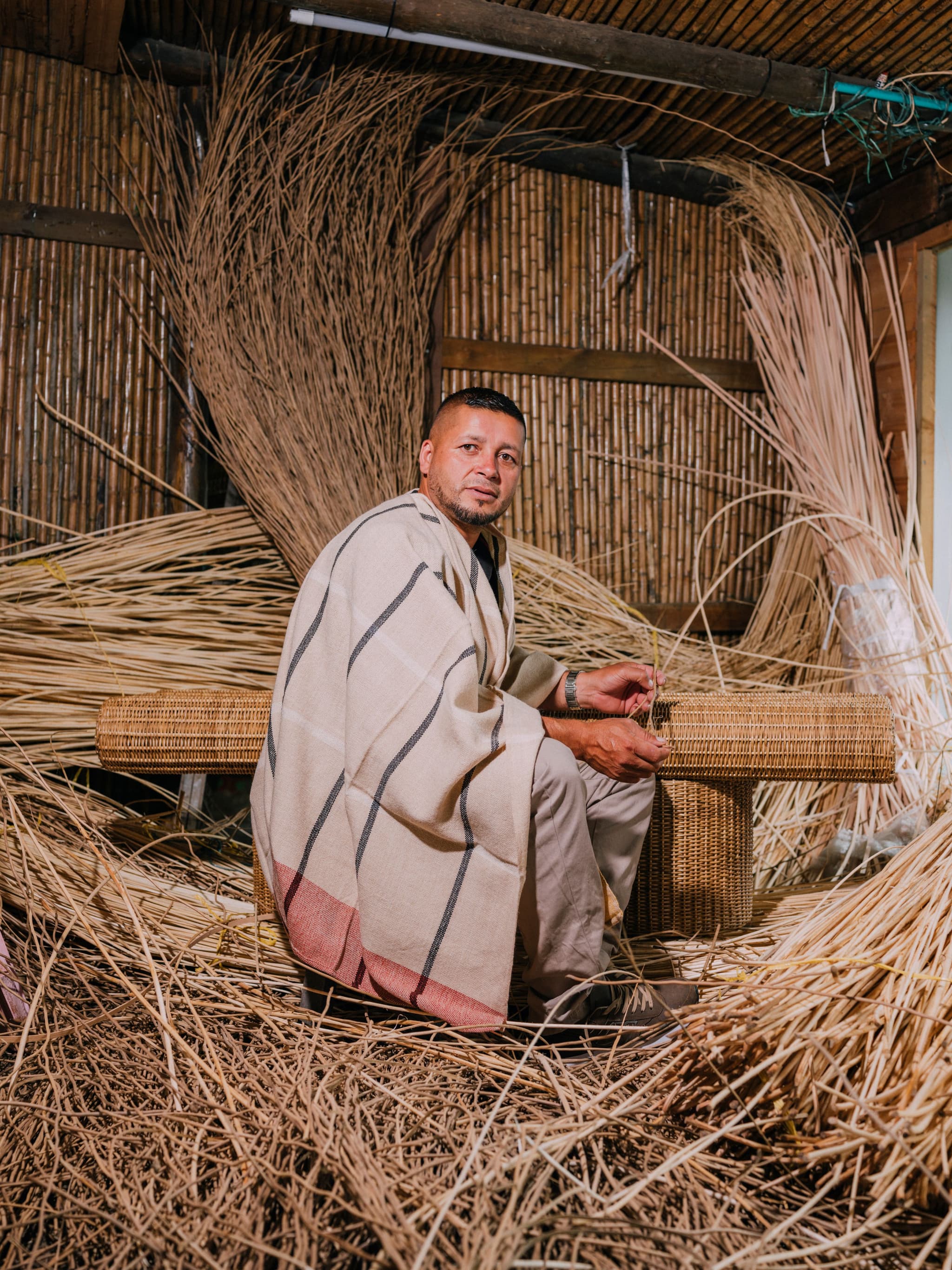
2. Yaré has deep cultural roots in the Amazonas. How did your collaboration with Indigenous communities shape your technical understanding of this fibre’s behaviour and limitations?
The fibre has been used for generations by Indigenous communities who understand its growth cycle, strength, and the best methods for harvesting it sustainably. Although I don’t collaborate with these communities directly, the artisans I work with purchase Yaré from them. Their ancestral knowledge has been instrumental in teaching us how to treat the fibre with respect and use it responsibly.
3. What specific challenges did you face when transitioning Yaré from a traditional weaving context into contemporary furniture forms, and how did you overcome them?
The most significant challenge was adapting traditional weaving techniques to suit the structural demands of modern furniture. The weave must follow the three-dimensional volume of each piece—a complex negotiation between form and material. Communication between designers and artisans was essential. It’s a dance between precision and tradition, which we are still refining with each prototype.
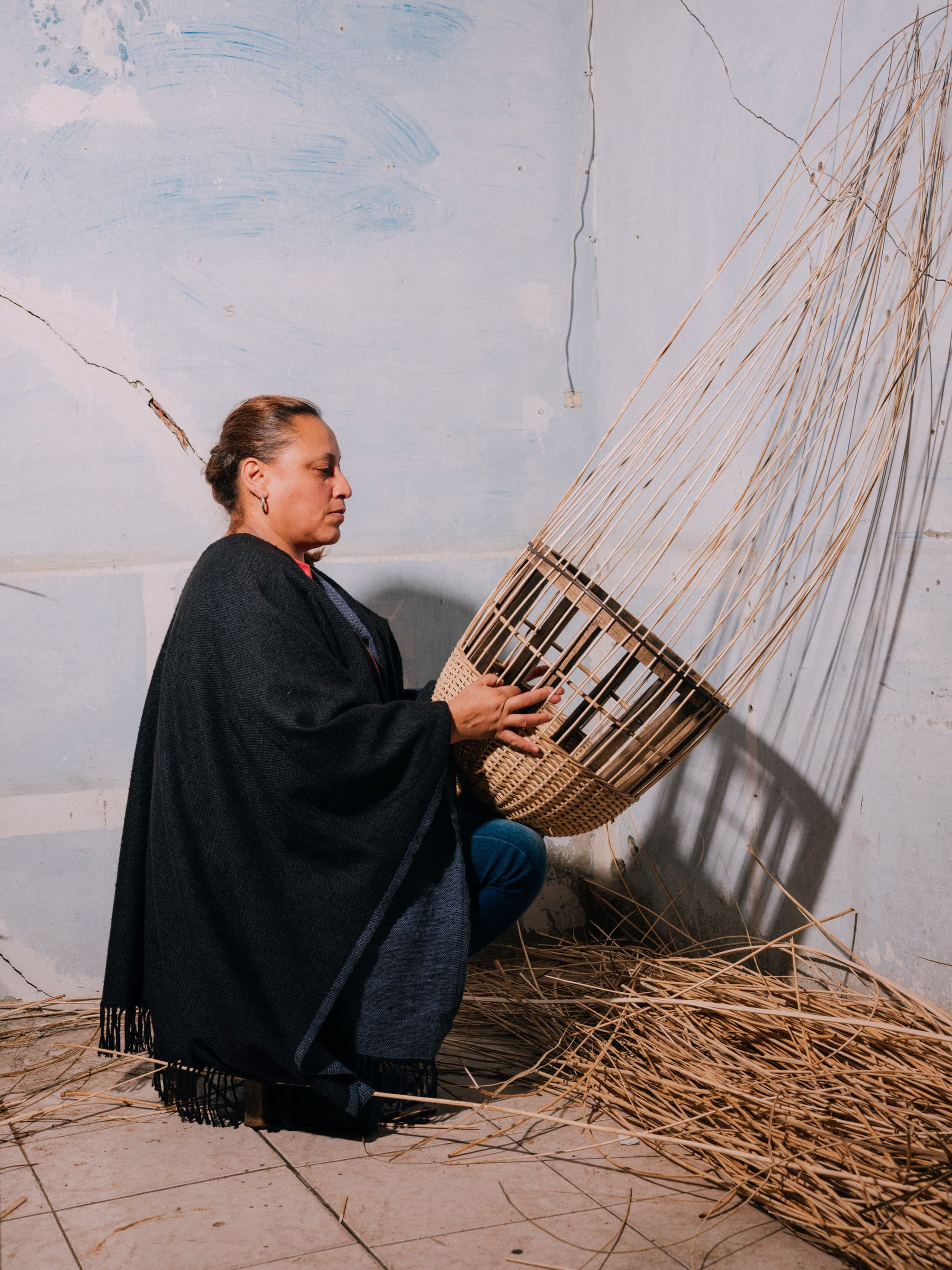
4. The weaving is central to the visual identity of Ibuju. What types of looms, tools, or techniques were employed or adapted to achieve the structural and aesthetic consistency across pieces?
We don’t use looms or industrial tools—everything is done by hand. The pieces are a direct result of the artisans’ craftsmanship, intuition, and deep understanding of the material. This human touch is what gives the collection its organic integrity and visual coherence.
5. How do you approach joinery and connection points when working with a natural, fibrous material that may shrink, expand, or degrade over time?
Yaré, like many natural materials, behaves differently depending on the environment. We build this adaptability into our designs—ensuring that joints allow for some movement. We rely on empirical knowledge and feedback from artisans to inform our structural decisions. These considerations make the final pieces more resilient over time.
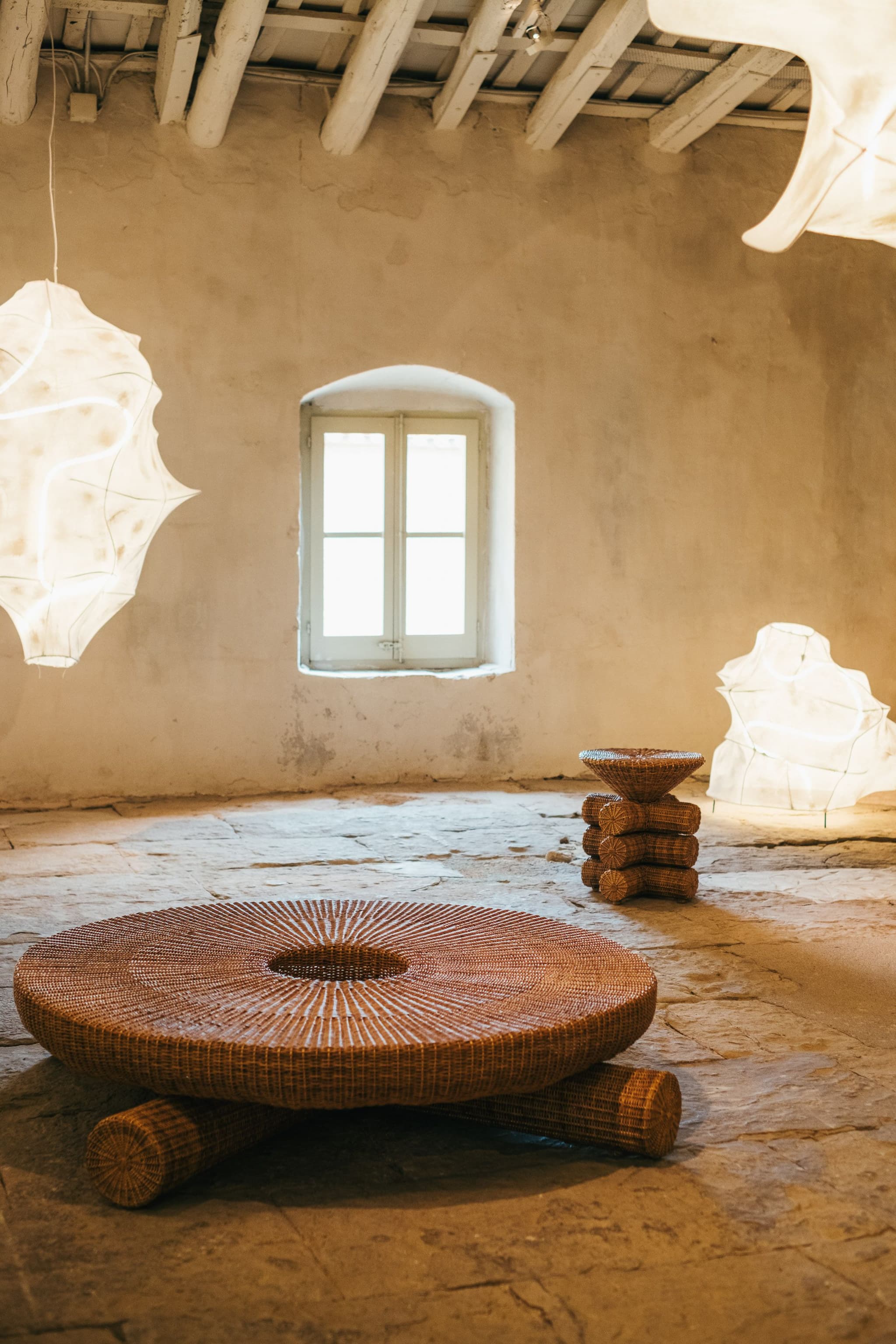
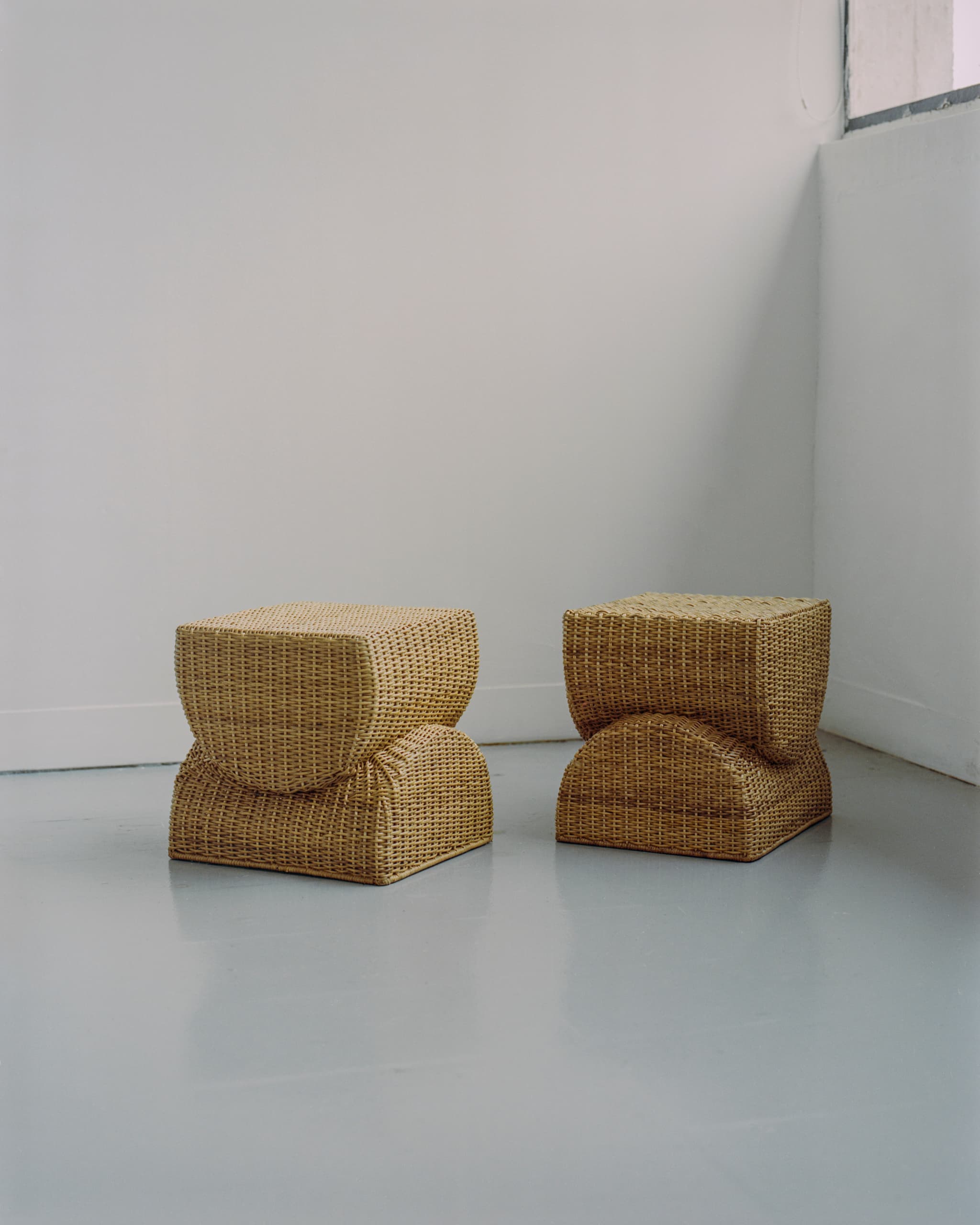
6. The Ibuju stool received recognition for its innovation. What made this form technically distinct in terms of material integration or production method?
The stool is the most intricate piece in the collection. It required a complex method of changing fibre directions and aligning multiple intersecting volumes. Unlike our other designs, this piece doesn’t rely on a single weaving pattern. Instead, it becomes a visual and structural experiment that pushed our team’s skills to new levels.
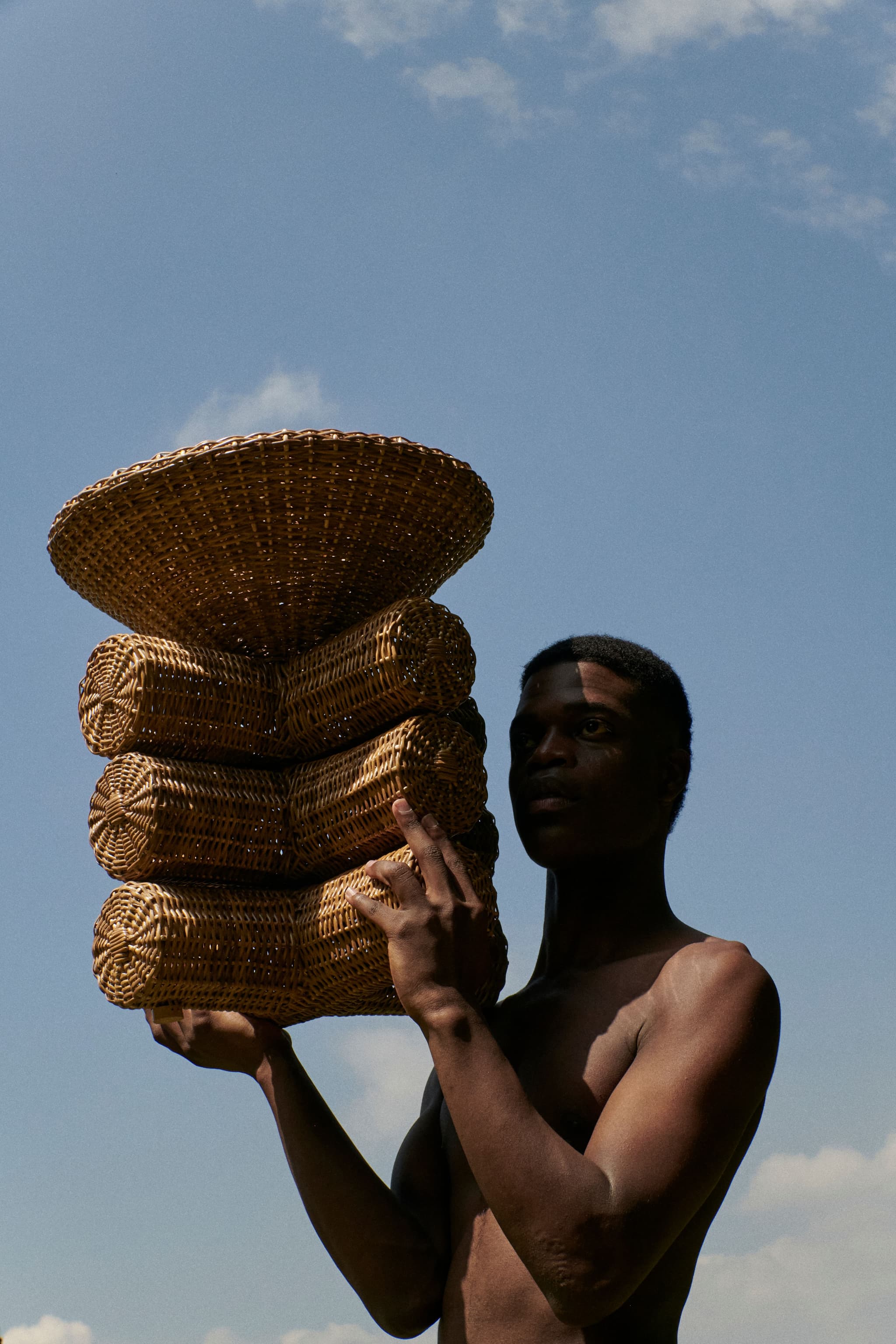
7. The concept of Ibuju highlights interplay between human, context, and object. How does this principle inform decisions around ergonomics, proportions, or form in the collection?
We’re inspired by the primitive forms of log furniture—basic shapes that reflect human utility. Our aim was to translate those essential forms into a modern context, preserving the tactile, grounded relationship people have with objects made directly from nature. We keep proportions intuitive, balancing comfort with symbolism.
8. Do you see potential for Yaré beyond furniture—in areas such as interiors, product design, or architectural elements?
Definitely. Yaré has the potential to be used in wall treatments, lighting, and even architectural facades. Its flexibility and strength make it ideal for experimental interior applications. Our long-term vision includes integrating Yaré into full-scale interiors that tell a consistent material story.
9. What are your next steps with the Ibuju collection—are you expanding the range, experimenting with hybrid materials, or exploring international production opportunities?
We’re currently developing new pieces inspired by organic, fluid forms, steering away from rigid structures. We’re also exploring the use of fique fibre, which has similar properties to Yaré but with unique ecological potential—particularly in fire prevention. These next steps aim to broaden our material palette and deepen our engagement with ecological design.