Key Points
- Tackles the UK’s hard-to-recycle crisp packets by separating multilayer films and reusing each stream.
- Delamination at room temperature enables PP films to be remelted; metallised layers are reshaped with light fusion to retain integrity.
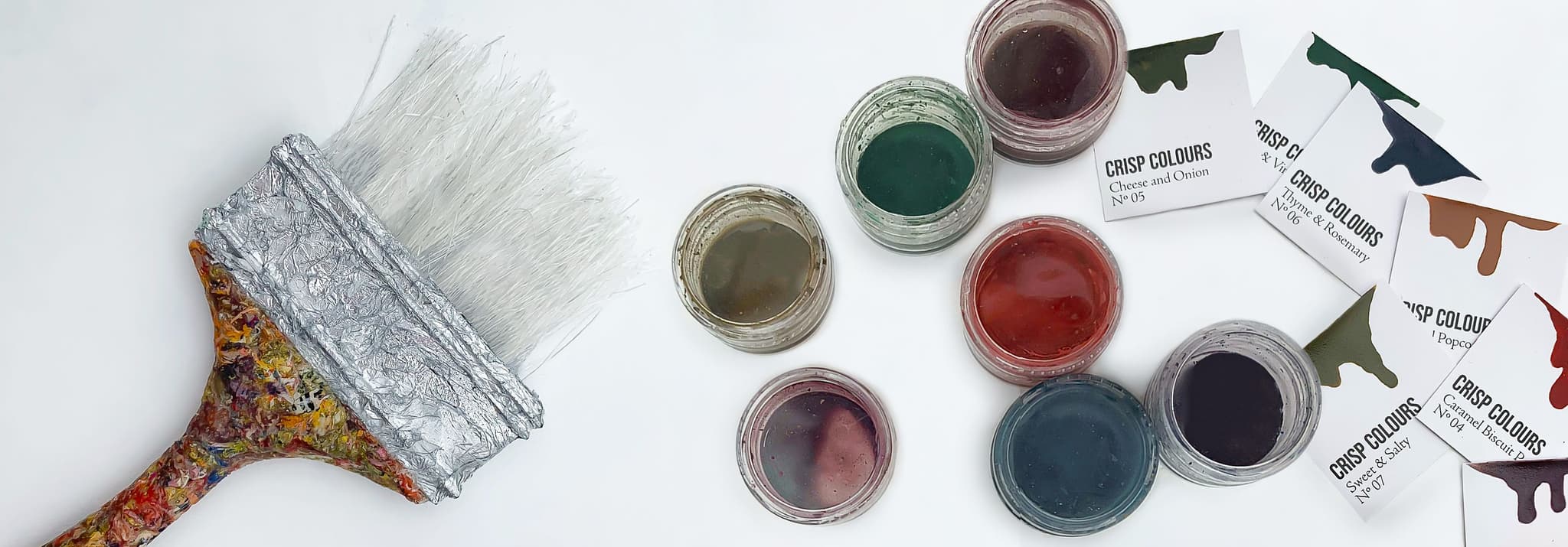
- Extracted printing inks are recovered as pigments, then bound into paints labelled by flavour/brand provenance.
- “Crispy” bowls are press-moulded from cleaned PP films to food-safe, rigid forms; process designed to minimise quality loss.
- Public engagement is built into the objects (serving crisps in crisp-made bowls) to prompt conversation about circularity and infrastructure gaps.
- Next steps: integrate recovered streams into filament extrusion and injection moulding to reach scalable manufacturing.
Full interview with Alara Sipahioglu
Can you describe the moment or inspiration that led you to explore the potential of waste materials, specifically crisp packets, for creating new products?
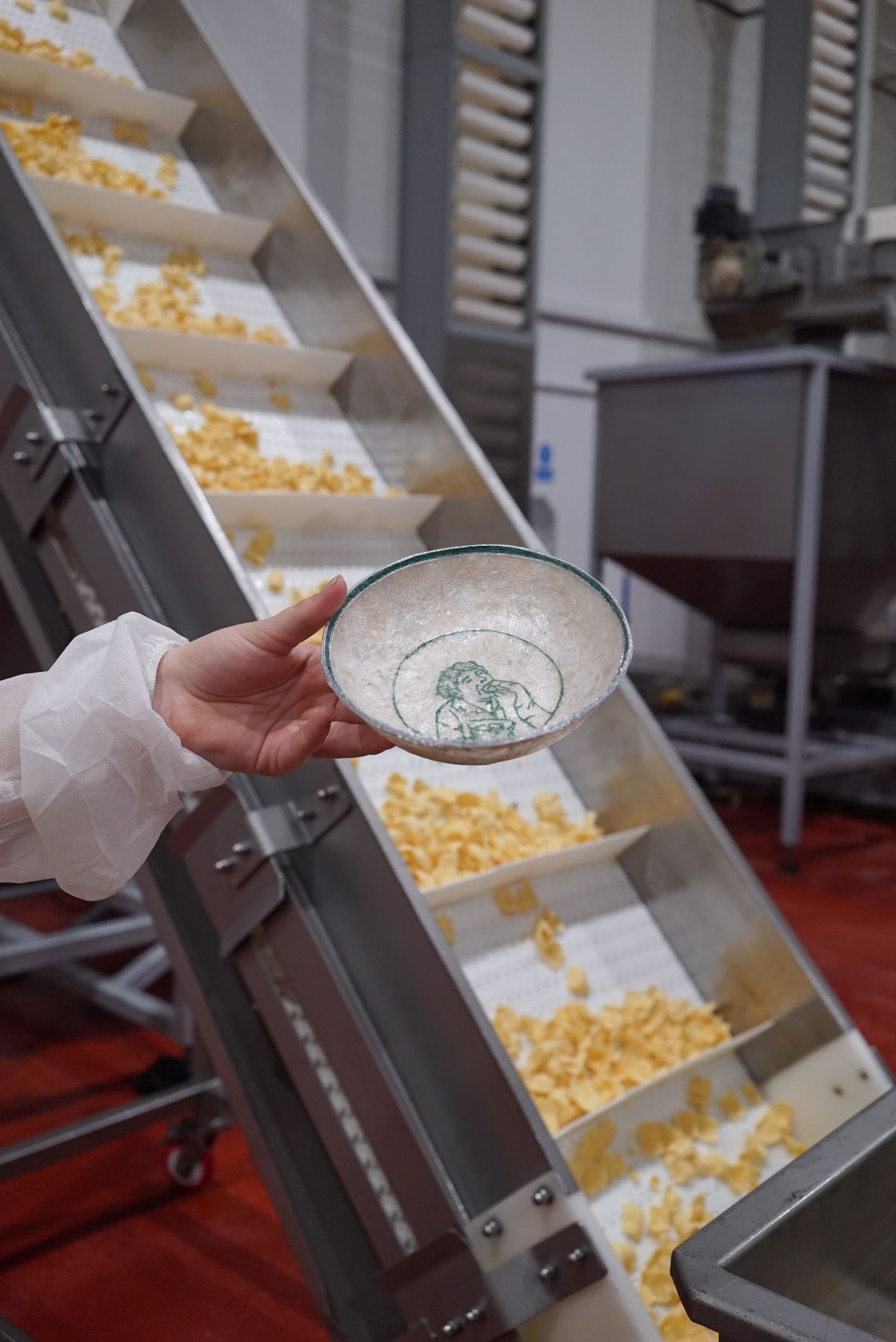
The journey began with a revelation about the materials that get rejected by recycling facilities due to contamination or complex composition, making them unprocessable by conventional recycling systems. This led to the realisation of our collective cluelessness and unawareness of actual recycling rates, the composition of the packaging we use and their end of life. Notably, crisp packets were in this list of rejected materials because of their complex multi-material structure, a packaging I always assumed to be recyclable because it is plastic.
This discovery motivated me to do more research and experimentation, driven by the belief that if these materials are put together, they can be taken apart and recycled. Even though some other food products use the same packaging material, the rich culture of crisps and the high consumption rate in the UK led me to focus my project on repurposing crisp packets and similar materials.
Your projects address a specific issue within the UK’s recycling capabilities. Can you give more details on this issue?
The UK has outlined plans to boost its recycling rates and implement new strategies, but there remain significant gaps in the system.
Despite a diverse array of materials entering the market, there's a glaring lack of infrastructure to effectively sort, collect, and recycle materials with complex compositions. The current recycling framework predominantly caters to mono-materials, leaving multi-material packaging out. Consequently, many of these materials end up either incinerated, sent to landfills or littered in the environment due to the absence of mainstream recycling schemes. According to the UK Household Plastic Packaging Collection Survey, only 7% of the complex plastics placed on the market were collected for recycling, while only 34 local authorities across the UK offer collections.
One of the key challenges, in my opinion, lies in the public's limited awareness and the absence of a strong incentive for manufacturers to adopt recyclable packaging formats. While engaging with various stakeholders in the crisp manufacturing and recycling sectors, it became apparent that significant, lasting change hinges on public demand and awareness. Additionally, legislative hurdles worsen the situation.
For instance, although there's a tax levied on packaging lacking recycled content, many manufacturers find it simpler to pay the tax than invest in sustainable alternatives. Moreover, the recycling process itself involves multiple parties, leading to a potential loss of responsibility and control over material tracking and disposal. Despite efforts such as the Packaging Waste Recovery Note (PRN) system aimed at monitoring recycling progress, the practice of exporting waste materials abroad introduces loopholes in accountability, rendering tracking efforts ineffective.
Besides mainstream recycling efforts, there are a few initiatives aimed at incorporating these overlooked packaging types into a recycling ecosystem. Typically, these initiatives involve collecting these materials at supermarket collection points and sending them to designated recycling partners.
However, due to the involvement of multiple parties, the efficacy of these schemes is often in question. For example, TerraCycle, an American recycling company partnering with major brands like Walkers, was sued as 30 bales of UK-based TerraCycle waste were found awaiting incineration in Bulgaria that was claimed to be recycled.
Furthermore, while the collected waste may be diverted from landfills or incineration, it typically undergoes downcycling into products like construction panels or outdoor furniture. While this represents a step up from traditional disposal methods, it results in plastics losing their recyclability and quality. To truly leverage the benefits of plastics and slow down the litter we create, we need to develop more efficient systems for all types of waste and embrace a circular mindset. This change requires action at various levels, including manufacturers, government bodies, and consumers alike.
Your work demonstrates a novel approach to recycling multi-material packaging. Could you detail the challenges encountered in separating and recycling the complex materials found in crisp packets?
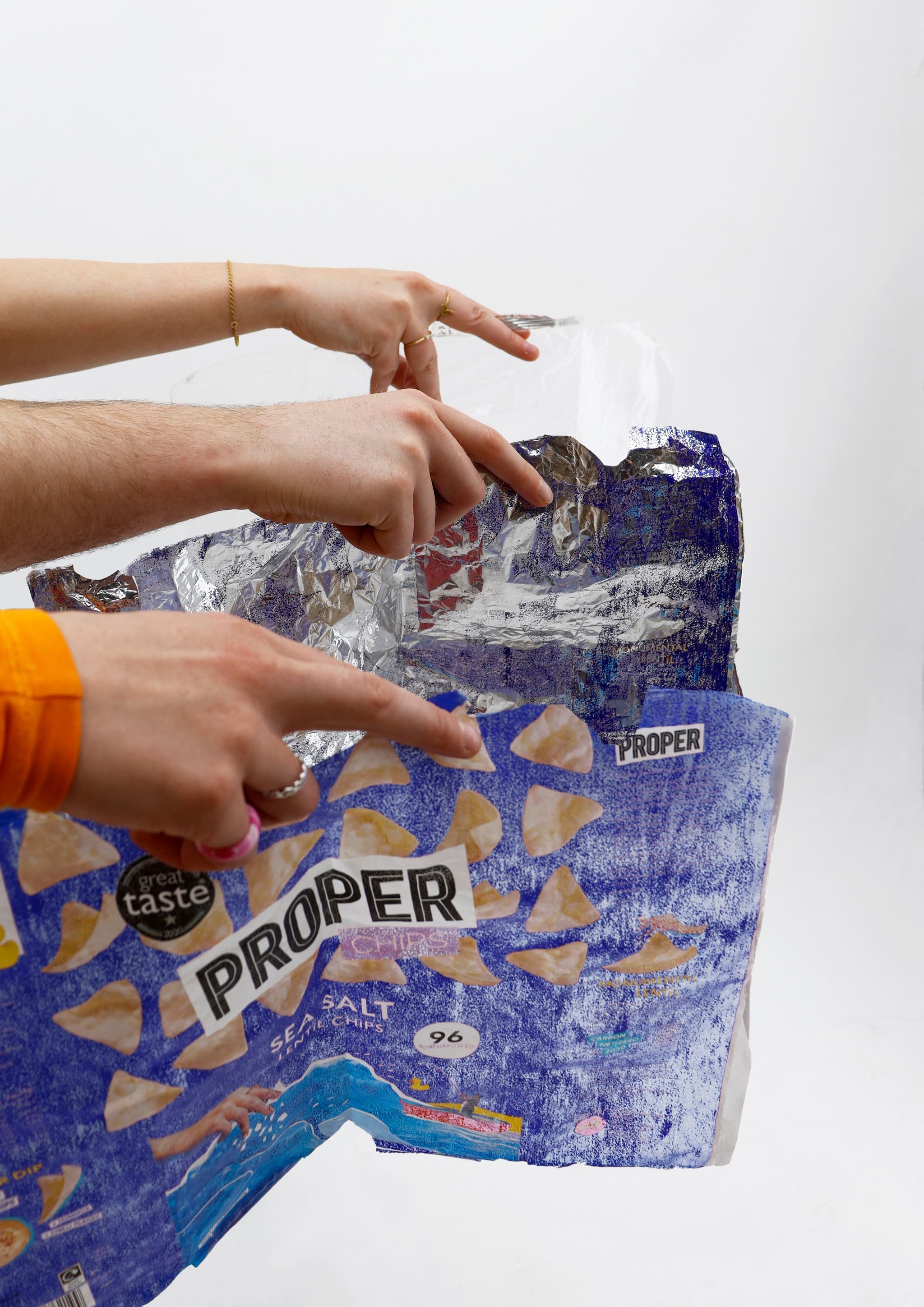
Ironically, the most straightforward aspect of the research proved to be identifying methods for separating the complex materials within crisp packets. Drawing from existing research on recycling polymer packaging with metal laminates, which typically utilised solvents in controlled environments at high temperatures, I adapted the approach for room temperature experimentation due to limited resources. Utilising a store-bought solvent, I conducted initial tests by immersing a cut piece of a crisp packet in the liquid within a sealed container overnight.
To my surprise, the following day, I was able to peel the different plastic layers from each other. Subsequent experimentation with various solvents confirmed the efficacy of the initial solvent. Furthermore, I discovered that the same solvent with added friction removed the ink from the packaging material. The ink extraction made it possible for me to use the plastics closest to their pure form, meaning that the loss of quality would be minimal. Additionally, this process created a second life for the ink used in printing.
The next challenge was reshaping the delaminated layers. Determining the plastic types used by different brands was crucial for melting the plastics at the appropriate temperatures. However, obtaining this information proved challenging, as some crisp brands were unresponsive to inquiries. Lacking access to industrial-level recycling machinery such as shredders or extrusion machines, I improvised with the tools at my disposal. These included experimenting with a heat press, vacuum-forming machine and metal moulds inside a plastic oven.
Recycling polypropylene films posed fewer complications, as they could be melted without significant complications. However, the best application involved melting them with added pressure to prevent material shrinkage and better fusion. On the other hand, recycling the metallised polymer films presented challenges, as complete remelting without extracting the aluminium compromised material properties. Consequently, I devised a method that reshaped the material with slight melting, preserving its integrity in a new thread-like form.
In the development of Crispy, how did you ensure the structural integrity and safety of the serving bowls?
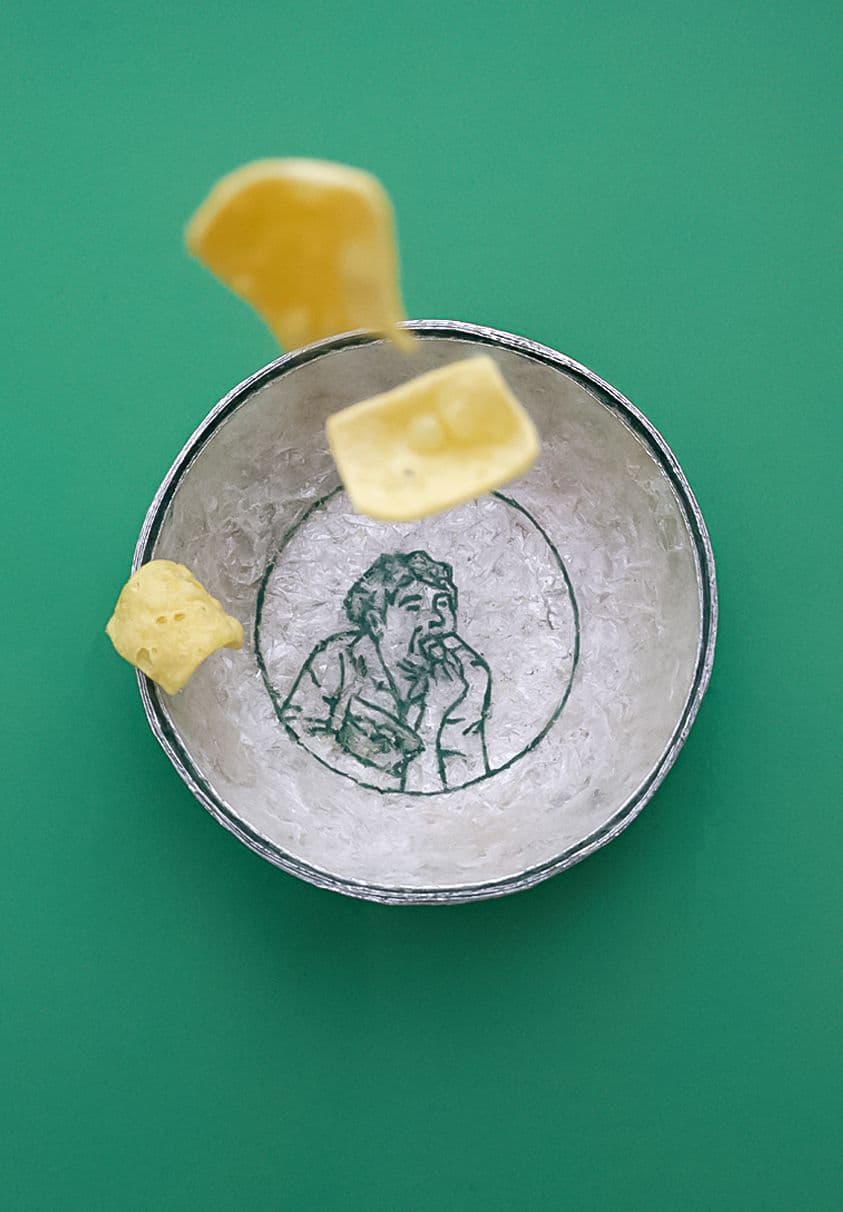
The straightforward recycling process of the bowls, constructed solely from polypropylene (PP) films, played a key role in ensuring the structural integrity and safety of the bowls. The original form of the PP films after delamination is a very light, translucent sheet. Yet, fusing multiple shredded PP films in a pressurised mould resulted in the forming of a rigid and durable structure. The increased amount added meant a thicker and less translucent final product.
Addressing safety and sanitariness concerns involved rigorous cleaning procedures throughout the manufacturing process. Each crisp packet underwent thorough washing to remove any lingering grease. Additionally, the solvent used to delaminate the packaging possessed cleaning properties, effectively serving a dual purpose of separation and sanitation. These processes ensure that the Crispy serving bowls not only uphold structural integrity but also meet safety standards.
Your projects often challenge societal attitudes towards recycling and circularity. What strategies do you employ to engage and educate the public on these issues through your work?
Firstly, I aim to transform the material so that the new form surprises observers while retaining elements of its origin. My goal is for individuals to question the material's composition and then discover its backstory, fostering a deeper connection to the narrative.
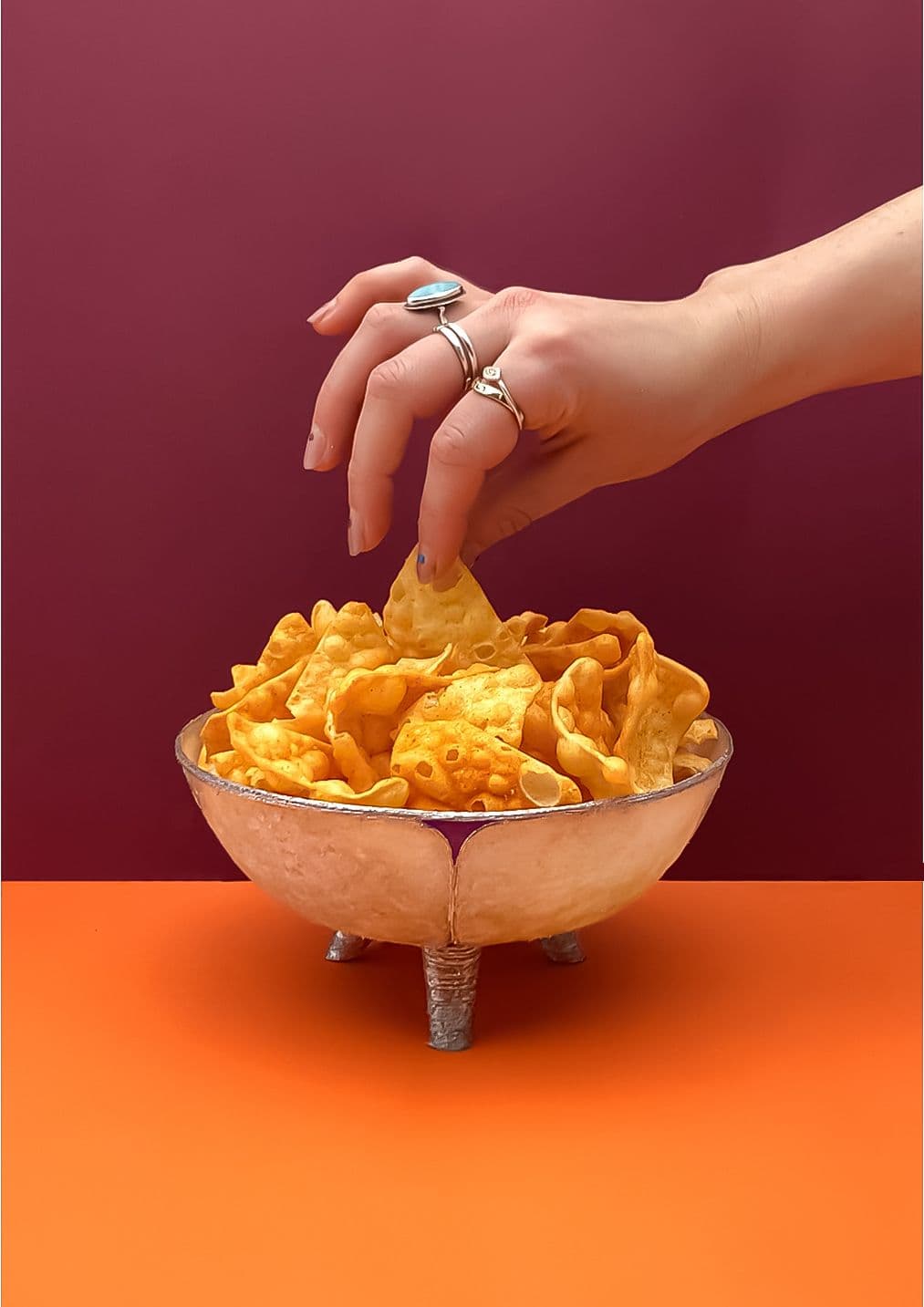
During exhibitions, placing crisps in the bowls serves as a surprise element, prompting observers to question why there are crisps in an exhibition space out of everything and sparking curiosity about the material's origin. By presenting familiar elements in a new context, I aim to capture the audience's attention and foster discussions around the potential of recycling and circularity while introducing the less talked about problems.
Recognising that societal perceptions of recycled plastics often adhere to a singular aesthetic, I strive to showcase the versatility of these materials through Crispy. By presenting recycled materials in unexpected forms, I aim to challenge preconceived notions and demonstrate the possibilities for their utilisation.
Furthermore, I incorporate an element of simple playfulness into the final objects, enhancing interaction with the audience. For example, the decision to create bowls allows for a full-circle moment where crisp packets, the very material from which the bowls are made, can once again contain crisps, albeit in a completely transformed state. Additionally, the illustrations depicting someone enjoying crisps and the paint representing a specific crisp flavour are added details for the viewer to uncover with further engagement.
The ink extraction process for creating paint appears to be a unique feature of your recycling process. Could you explain the technical aspects of this process?
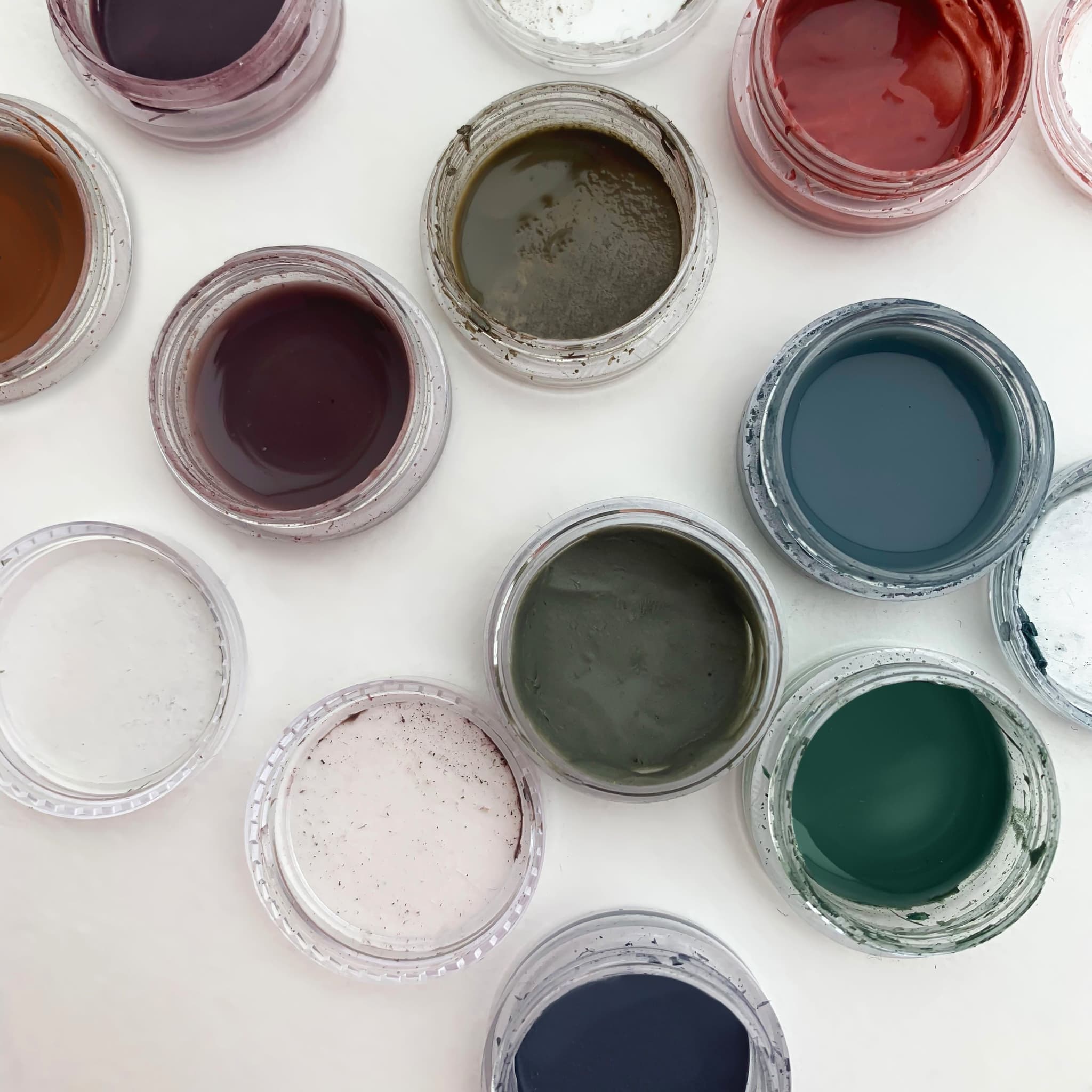
My aim throughout the recycling process has been to preserve the quality of the plastics as much as possible to ensure their continued recyclability. Extracting and reusing the ink printed on the packaging emerged as a logical step in this endeavour. After delamination, the pigment extraction process uses the same solvent with a brush to scrape off the ink from the packaging. The resulting coloured liquid mixture is then left to evaporate, yielding the pigments in a solid form.
To maintain consistency in the paint produced, I adopt a standardised approach. I do not separate colours used within a packaging, instead opting to mix them to observe the resulting colour from the flavour and brand of crisp packets it derives from. Once the pigments are in solid form, I grind them using a mortar and pestle.
Subsequently, I add a binder to the powdered pigments and mix them using the same method until achieving the desired consistency. Throughout this process, everything is measured to ensure consistency in the paint produced.
What other potential products do you envision could be created using materials from crips packets?
I believe that with the right processes and applications, complex materials that are difficult to process can be re-integrated into a second life across different industries, especially with materials like PP films. While my projects focused on crafting unexpected objects to ignite conversations and raise awareness about the materials, the broader scope includes reintroducing challenging-to-recycle packaging types back into packaging to move towards a more circular system.
Alternatively, I'm intrigued by the idea of designing objects that align with the original product's purpose, such as crafting bowls for serving crisps from crisp packets. The key lies in ensuring that the materials are effectively separated, as this process transforms them into regular mono-plastics, facilitating their recycling akin to any other widely recycled plastic.
Furthermore, it is also vital to identify the optimal processing methods and applications for each material to ensure durability. Therefore, the feasibility of creating new products hinges on the ability to effectively process these materials, along with considering their compatibility with the intended use and the broader goals of sustainability and circularity.
Looking towards the future, what emerging technologies or materials are you excited about exploring next in your quest for promoting circularity in design?
Looking ahead, I'm particularly excited about exploring how the materials recovered from crisp packaging can integrate into more industrial processes, such as filament extrusion machines for 3D printing and injection moulding machines, thus paving the way for these materials to enter the realm of mass manufacturing. This step is crucial for scaling up the impact of circular design principles and making sustainable practices more accessible on a larger scale.
Additionally, I'm eager to delve into similar materials that are currently overlooked by existing recycling systems and reimagine their potential role in the world. By reassessing our approach to materials and consumption, we can strive to be more responsible for the waste we create and leave behind, recognising that resources are finite and should used thoughtfully.
Ultimately, my goal is to continue pushing the boundaries of circular design, looking at waste as another resource and leveraging emerging technologies to foster a more sustainable and conscientious approach to design.